
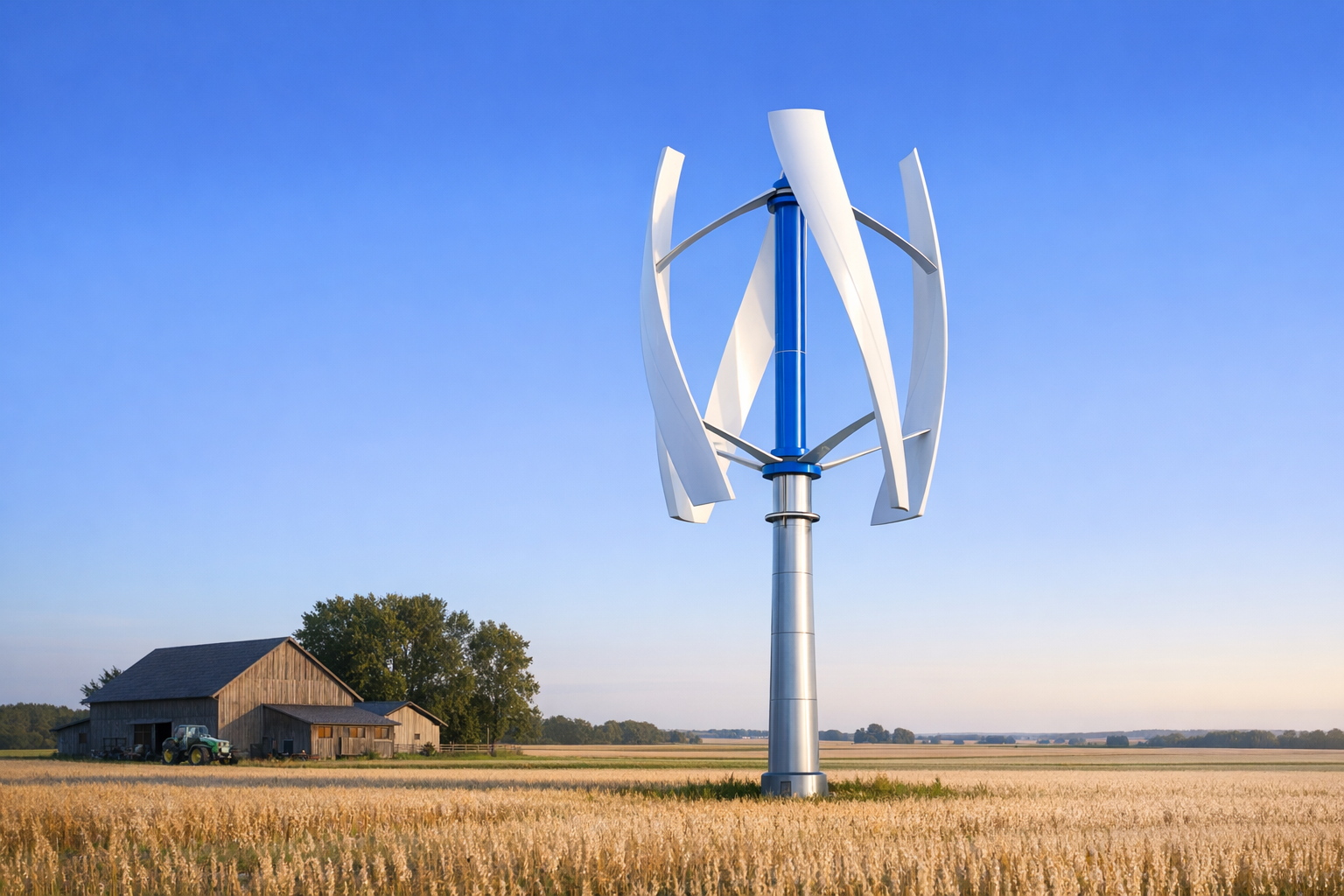
This article is for educational purposes only and does not constitute legal advice. Planning law in Germany is applied at the local authority level, and rules vary between states and municipalities. Always confirm your project's permissibility with your local Bauaufsichtsbehörde and a qualified Rechtsanwalt specialising in German building law before proceeding.
Germany's Außenbereich-land outside settlement boundaries without a binding Bebauungsplan (land-use plan)-is closed to new construction by default. The logic is deliberate: open countryside should stay open. Yet §35 of the Baugesetzbuch (BauGB) carves out a short list of privileged projects that are permissible there without a new Bebauungsplan, provided no weighty public interests oppose them.
Two of those privilege categories are directly relevant to farmers, foresters, vineyard operators, and agricultural cooperatives-and they work very differently. Understanding which one applies to your project can mean the difference between a straightforward approval and a years-long planning battle. This article explains both routes, why the farm-specific one is often the stronger choice, and exactly what documentation the Bauaufsicht will expect.
This post is part of LuvSide's German Permitting Atlas for Small Wind Turbines. State-specific details can be found in the Bavaria, Baden-Württemberg, NRW, Niedersachsen, and Hessen posts in the series.
The Two §35 Privilege Paths for Agricultural Operators
Most farmers know that wind energy is generally permissible in the Außenbereich. What many don't realise is that there are two distinct privilege routes-and for active agricultural holdings, the second is usually the better starting point.
§35 Abs. 1 Nr. 5: General Wind Energy Privilege
Under §35 Abs. 1 Nr. 5 BauGB, a project serving the "research, development, or use of wind energy" qualifies as a privileged project in the Außenbereich-meaning wind turbines are permissible under planning law provided public interests (öffentliche Belange) do not oppose the project and adequate access is secured.
This route is open to any operator, not just farmers. It is also the route most commonly referenced in general permitting guides. However, it has a structural weakness many operators only discover during the application process.
§35 Abs. 1 Nr. 1: Agricultural and Forestry Privilege
Under §35 Abs. 1 Nr. 1 BauGB, structures that serve (dienen) an active agricultural or forestry holding-including those serving the energetische Versorgung des landwirtschaftlichen Betriebs (the farm's energy supply)-are also privileged in the Außenbereich. What constitutes a "landwirtschaftlicher Betrieb" for §35 Abs. 1 Nr. 1 BauGB purposes is legally defined in §201 BauGB.
A livestock farm installing a VAWT to power barn ventilation, a vineyard running a turbine for pressing and refrigeration equipment, or a grain operation using wind energy for its drying system-these are not "wind projects that happen to be on a farm." They are structures serving the farm's energy needs, and that distinction matters enormously in the approval process.
For farmers operating small wind turbines, §35 provides two levers: the agricultural holding itself is privileged, and the small wind turbine can be approved as a subordinate ancillary structure under §35 Abs. 1 Nr. 1; alternatively, the turbine is privileged as an independent object under §35 Abs. 1 Nr. 5.
Why Nr. 1 Is Often the Stronger Route
The difference between the two routes is not just procedural-it reflects how much latitude the Bauaufsicht has to refuse your application.
Privileged projects under §35 Abs. 1 must not have public interests opposing them. This is the decisive difference from non-privileged projects: non-privileged projects must not impair public interests, whereas privileged projects must not have public interests standing against them-a meaningfully higher threshold for refusal.
Under Nr. 5, the balancing test still includes a broad range of potential objections: Naturschutz concerns, visual impact, proximity to infrastructure, and landscape protection overlays can all be cited against your application. Authorities retain real discretion.
Under Nr. 1, the agricultural purpose is concretely demonstrable through operational data. The turbine exists to serve a documented, functioning farm-and that specificity makes it harder for authorities to mount a general objection. The Betriebsdienlichkeitsprüfung (the test that the structure genuinely serves the farm) is the key qualifying criterion, and once satisfied, the privilege is strong.
A practical example: a 14 m VAWT installed at a livestock barn to power ventilation fans, milk cooling equipment, and a roadside Hofladen typically qualifies under Nr. 1. The agricultural nexus is concrete and documentable.
| Criterion | §35 Abs. 1 Nr. 1 (Agricultural Nexus) | §35 Abs. 1 Nr. 5 (Wind Energy General) |
|---|---|---|
| Who can use it? | Active agricultural/forestry operators only | Any operator - not farm-specific |
| Qualifying test | Structure must serve (dienen) the farm's energy supply - Betriebsdienlichkeit | Project must serve development/use of wind energy |
| Strength of privilege | Strong: agricultural purpose is concretely demonstrable; harder to oppose | Moderate: authority must weigh öffentliche Belange including Naturschutz, visual impact, infrastructure |
| WindBG area target impact? | NOT affected - farm energy installations are independent of WindBG framework | Narrows once Bundesland meets its Flächenbeitragswert; wind outside Windenergiegebiete faces tighter pathway |
| Surplus grid export permitted? | Yes, provided primary purpose remains farm energy supply - oversizing risks reclassification | Yes - standard EEG rules apply |
| Best for | Livestock farms, vineyards, greenhouses, Hofläden, forestry operations with demonstrable energy demand | Non-farm operators, agricultural cooperatives running a Deponie, any Außenbereich wind project |
The WindBG Area Target-and Why Nr. 1 Is Insulated
The Windenergieflächenbedarfsgesetz (WindBG) introduced binding area targets for each Bundesland, requiring them to designate a specified percentage of their land for wind energy. This has significant implications for the §35 Nr. 5 route.
Once a Bundesland reaches its Flächenbeitragswert, the permissibility of wind installations outside designated Windenergiegebiete will be governed only by §35 Abs. 2 BauGB. At that point, the §35 Nr. 5 privilege in the Außenbereich lapses, and wind turbines are treated as "sonstige Vorhaben"-non-privileged projects.
The WindBG introduced binding Flächenbeitragswerte-area targets-for wind energy designations by state, aiming to provide sufficient land for accelerated onshore wind expansion. Niedersachsen must reach 1.7% of its land area designated for wind energy by end-2027 and 2.2% by end-2032. States progressing quickly toward their targets-Niedersachsen and Baden-Württemberg prominent among them-will see §35 Nr. 5 become a narrower pathway relatively soon.
The Nr. 1 route is structurally different. The agricultural energy supply privilege operates independently of the WindBG framework. Farm energy installations remain privileged regardless of whether the state has met its area target and regardless of whether the site falls inside or outside a designated Vorranggebiet. This makes Nr. 1 a durable, future-proof pathway for agricultural operators-and an important reason to invoke it explicitly in your application.
What the Bauaufsicht Will Ask For
Invoking §35 Nr. 1 requires more than simply stating that you run a farm. The Bauaufsichtsbehörde will expect you to demonstrate the agricultural nexus concretely. Plan for the following:
- Proof of active holding: Land ownership documents or long-term lease agreements; your entry in the agricultural or forestry register; the last three years of operational records (tax filings, animal headcount, crop declarations, harvest records, or equivalent).
- Energy balance: A documented estimate of the farm's annual electricity demand for the specific operations the turbine will supply. This is critical-the turbine must be sized to the farm's needs, not oversized for grid export.
- Use specification: Which farm activities will draw power from the turbine? Stall ventilation, irrigation, milk cooling, grain drying, refrigerated storage, processing equipment, Hofladen, electric farm vehicle charging?
- Location justification: Why is this specific site the appropriate location relative to the farm's energy consumption centres?
Überschusseinspeisung and the Betriebsdienlichkeitsprüfung
Farm-scale turbines can export surplus electricity to the grid under EEG-Vergütung rules without losing Nr. 1 status-provided the primary purpose remains farm energy supply.
However, courts have increasingly scrutinised oversizing. The "dienen" (serving) requirement-drawn from established administrative court case law on agricultural structures-demands that a structure be "not merely beneficial but more than that, and that it is externally shaped by its assignment to the specific operation." A turbine significantly larger than the farm's documented annual demand risks reclassification under Nr. 5, losing the durability advantage described above.
Practical rule: size the turbine to roughly match annual farm consumption with modest headroom for growth. Document the calculation and include it in your application dossier.
What §35 Privilege Does Not Eliminate
Securing §35 Nr. 1 privilege resolves the planning law question (Bauplanungsrecht). It does not bypass the building law layer (Bauordnungsrecht) or associated environmental requirements. You will still need to address:
- Landesbauordnung permit tier: Depending on total tip height, your turbine may be verfahrensfrei (permit-free), subject to Genehmigungsfreistellung (simplified notification), or require a full Baugenehmigung. Height thresholds vary by state.
- TA Lärm noise limits: The nearest residential neighbour property sets the relevant immission reference point. Mixed-use or village zones (WA, MD, MI) carry stricter limits than purely agricultural areas.
- §17 Abs. 3 BNatSchG Naturschutz review: Particularly relevant in agricultural areas adjacent to FFH-Gebiete, Vogelschutzgebiete (EU SPAs), or Wattenmeer zones (coastal Niedersachsen farms).
- Abstandsflächen: The minimum distance to property boundaries under your Landesbauordnung, calculated from the turbine's total tip height.
- Standsicherheitsnachweis: A structural safety certificate. LuvSide turbines include Typenprüfung documentation, which substantially simplifies the structural sign-off step.
- MaStR registration: Every wind turbine must be registered in the Marktstammdatenregister (MaStR) within one month of commissioning.
Four Agricultural Scenarios-Side by Side
These scenarios illustrate how the framework plays out in practice. Each is a simplified sketch for educational purposes; actual approvals depend on individual site conditions.
A) Livestock farm, Emsland (Niedersachsen)-14 m VAWT for barn ventilation + Hofladen §35 Nr. 1 privilege applies. Under NBauO §60, turbines up to approximately 15 m in the Außenbereich are verfahrensfrei in Niedersachsen-no formal Baugenehmigung required. Screen for coastal SPA and Wattenmeer overlays (§17 BNatSchG). Standsicherheitsnachweis via Typenprüfung. This is the clearest pathway in the atlas, and the reason Niedersachsen's agricultural permitting rules deserve separate detailed treatment.
B) Vineyard, Hohenlohe (Baden-Württemberg)-20 m HAWT for pressing and refrigeration Nr. 1 privilege is likely applicable, but BW's dense Landschaftsschutz overlay and the role of Regionalverbände introduce additional screening steps. Both the Untere Baurechtsbehörde and the relevant Regionalverband should be consulted early. §17 BNatSchG is routinely triggered. See the Baden-Württemberg permitting guide in this series.
C) Agricultural cooperative, NRW-two 25 m HAWTs on a capped Deponie The Deponie itself is not part of the agricultural holding, so Nr. 1 privilege does not apply-this falls under Nr. 5 (or potentially an industrial-zone analysis). Full Baugenehmigung required above 10 m. Additional foundation assessment for the Deponie cap is mandatory.
D) Forestry holding, Vogelsberg (Hessen)-VAWT for sawmill and workshop Nr. 1 applies to forestry as well as agriculture. However, the Vogelsberg Special Protection Area (SPA) proximity triggers a §34 BNatSchG Verträglichkeitsprüfung-the most complex of the four scenarios. Early engagement with the Untere Naturschutzbehörde is essential before investing in detailed planning. See the Hessen permitting overview for more on SPA proximity constraints.
Why VAWTs Often Suit Farm Settings
Beyond the regulatory pathway, turbine type matters practically in agricultural environments:
- Lower visual profile in working agricultural landscapes-a VAWT's compact footprint reads as farm infrastructure rather than industrial equipment.
- Quieter operation relative to HAWT designs of equivalent output, particularly relevant near livestock, residential farmhouses, or village-edge Höfe.
- Reduced bird collision risk in areas with active raptor populations-an argument that can strengthen the Naturschutz screening outcome.
- LuvSide's WindSun hybrid system for farms combines the Helix VAWT series with photovoltaics to cover the full seasonal demand curve-wind's winter-heavy production profile complements solar's summer peak, maximising the farm's energy autonomy without oversizing either technology.
Pre-Application Checklist for Farm Operators
Use this checklist before engaging a planner or Rechtsanwalt:
Verify the planned turbine site lies outside any Bebauungsplan area and outside the Innenbereich (contiguous settlement). Check with your local Bauamt or regional GIS portal. Sites adjacent to farm buildings in open countryside will usually qualify.
Gather land ownership documents or long-term lease agreements, your entry in the Landwirtschaftsregister or Forstregister, and the last three years of operational records (tax filings, animal headcount, crop declarations, or equivalent).
Calculate the farm's annual kWh consumption for the operations the turbine will supply: barn ventilation, milk cooling, grain drying, irrigation pumps, refrigerated storage, Hofladen, electric farm vehicles. Document the math - the turbine must be sized to these needs.
Use your Bundesland's environmental information system (e.g., BayernAtlas, UDO NRW, LUBW BW, NIBIS Niedersachsen) to check for FFH-Gebiete, Vogelschutzgebiete (SPAs), Naturschutzgebiete (NSG), and Landschaftsschutzgebiete (LSG) overlaps. Any of these can trigger a §17 Abs. 3 BNatSchG review.
If any farm buildings are listed (denkmalgeschützt), confirm whether the turbine installation - including foundation, cable routing, and visual proximity - requires separate Denkmalschutzbehörde approval.
Choose turbine height and type based on wind resource, visual constraints, and your Landesbauordnung permit tier (the height thresholds for verfahrensfreiheit vary by state). VAWTs such as the LuvSide Helix series typically have a lower tip-height for equivalent rotor area, and their Typenprüfung documentation simplifies the Standsicherheitsnachweis step.
Before submitting a full application, request a preliminary planning inquiry (Vorbescheid or Bauvoranfrage) to confirm the authority's position on §35 privilege and any site-specific constraints. This is particularly advisable in states with dense Landschaftsschutz overlays (BW, Hessen, Bayern) or coastal Naturschutz zones (Niedersachsen).
Working with LuvSide on Your Farm Installation
LuvSide is a turbine manufacturer, not a legal advisor-and this article does not substitute for professional planning or legal counsel. But we can help concretely before you engage a planner: our team can discuss your farm's energy profile, suggest appropriate turbine specifications from the LuvSide Helix and HuraKan product lines, and provide the Typenprüfung documentation that accompanies every LuvSide turbine-the same documentation that simplifies the Standsicherheitsnachweis step in your Baugenehmigung application.
If you've read this far and are wondering whether your project is legally feasible, a brief conversation with us is a practical next step. We speak with farmers and agricultural advisors regularly and can help you identify the right questions to bring to your Bauamt.
Frequently Asked Questions
Does §35 Nr. 1 privilege apply to a hobby farm or a part-time agricultural operation?
The privilege under §35 Abs. 1 Nr. 1 BauGB requires a genuine, economically active agricultural or forestry holding as defined in §201 BauGB. A hobby farm without genuine commercial agricultural activity will not qualify. However, the turbine may still be permissible under §35 Abs. 1 Nr. 5 as a general wind energy installation, subject to the standard public-interest balancing test. Always confirm with your Bauamt.
Can a forestry operation (Forstbetrieb) use the Nr. 1 privilege?
Yes. §35 Abs. 1 Nr. 1 BauGB covers both agricultural (Landwirtschaft) and forestry (Forstwirtschaft) operations. A forestry holding that can demonstrate an active business and a genuine energy demand - for example, sawmill machinery, drying kilns, or workshop equipment - can invoke Nr. 1 for a turbine serving that demand.
Does the WindBG area target affect my farm's §35 Nr. 1 application?
No. The WindBG Flächenbeitragswerte and the narrowing of §35 Abs. 1 Nr. 5 privilege operate independently of the agricultural energy supply route under Nr. 1. A farm turbine serving the farm's documented energy needs remains privileged regardless of whether the Bundesland has met its wind area target, and regardless of whether the site is inside or outside a designated Vorranggebiet.
What happens if my turbine generates more electricity than the farm uses?
Surplus export to the grid (Überschusseinspeisung) under EEG-Vergütung is generally permissible without losing §35 Nr. 1 status - provided the primary purpose of the installation remains farm energy supply. Courts have increasingly scrutinised oversizing: a turbine significantly larger than the farm's documented annual demand may be reclassified under §35 Nr. 5. Size the turbine to roughly match consumption with modest headroom and document the energy balance calculation.
Do I still need a Baugenehmigung under §35 Nr. 1 privilege?
§35 privilege addresses planning law permissibility (Bauplanungsrecht) - it does not replace the building permit tier under your Landesbauordnung (Bauordnungsrecht). Depending on the turbine's total tip height, your state may classify it as verfahrensfrei, genehmigungsfreigestellt, or baugenehmigungspflichtig. In most states, turbines up to 10 m are permit-free; thresholds above that vary. Check your state's current Landesbauordnung.
Is a VAWT treated differently from a HAWT in the §35 Nr. 1 assessment?
The §35 privilege test applies to the purpose and nexus of the installation, not to the turbine type. However, the rotor diameter classification (relevant for Abstandsflächen calculations) and noise characteristics differ between VAWT and HAWT designs, which can affect how the Landesbauordnung permit tier and TA Lärm assessment are applied. VAWTs such as the LuvSide Helix series typically have lower tip heights for equivalent output and quieter operation, which can simplify noise compliance on agricultural sites near residential properties.
Last reviewed: May 2026. German planning law changes frequently-particularly WindBG area target timelines and state-level Landesbauordnung height thresholds. We recommend reviewing this article annually. Any post older than 18 months should be verified against current legislation before use in planning decisions.