
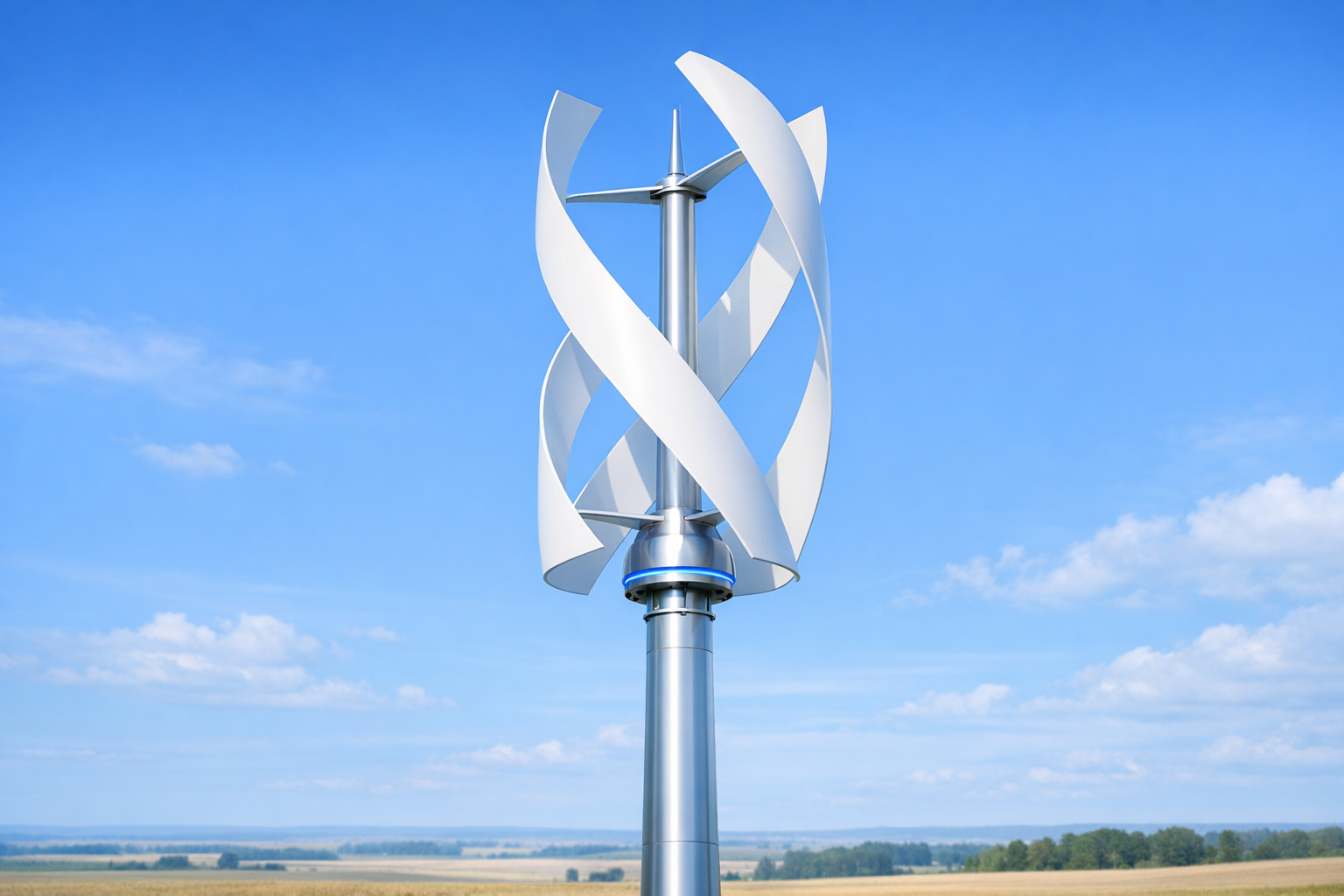
Sweden has some of Europe's most favourable conditions for small wind energy - long coastlines, consistent inland wind resources, and a national ambition to achieve 100% renewable electricity by 2040. Yet the permitting landscape rewards preparation. Sweden draws a sharp line between turbines that require no formal permit, those requiring a bygglov (building permit) from the municipality, and those entering the stricter Miljöbalken (Environmental Code) track. Getting the tier wrong at the outset is the most common cause of project delays.
This article maps the three-tier system as it stands in 2026 - for farmers (lantbrukare) in Skåne, industrial site managers in Västra Götaland, municipal energy planners (energistrateger), and international operators evaluating Sweden as a deployment market.
Not legal advice. Always verify current requirements with the relevant kommunens byggnadsnämnd and the länsstyrelse, and consult a qualified Swedish planning lawyer before submitting an application.
This article is an educational overview of the Swedish permitting framework for small wind turbines. It does not constitute legal advice. Rules vary by municipality and change regularly. Always verify current requirements with the relevant kommun's byggnadsnämnd (building committee) and the länsstyrelse (county administrative board), and consult a qualified Swedish planning lawyer before submitting an application.
Last reviewed: May 2026
The Two Primary Statutes
Sweden's small wind permitting rests on two laws:
- Plan- och bygglagen (PBL, SFS 2010:900) - the Building and Planning Act. This governs bygglov and is administered at the municipal level by the byggnadsnämnd (building committee). Think of it as the Swedish equivalent of local building control.
- Miljöbalken (SFS 1998:808) - the Environmental Code. This governs environmental permits (tillstånd) and notifications (anmälan) for activities with potential environmental impact. Administered by the länsstyrelse (county administrative board), a regional government authority, Miljöbalken covers most activities related to constructing and operating energy facilities, with the purpose of promoting sustainable development.[1]
The two laws operate in parallel. Depending on your project's scale and location, you may need to satisfy both - or only one.
The Three Permit Tiers
| Tier | Trigger Conditions | Process | Authority | Indicative Timeline |
|---|---|---|---|---|
| Tier 1 - Permit-Free | Very small turbines, typically ≤20 m, ≤3 m rotor; detached single-family dwelling; no protected area overlay. Verify with stadsbyggnadskontor first. | No formal application. Operator bears full compliance responsibility. | Kommunen (self-verify) | No formal process |
| Tier 2 - Bygglov Required | Most installations above the permit-free threshold; any turbine in a detaljplan area; rooftop installations in sensitive zones. | Application to byggnadsnämnden. Detaljplan check. Neighbour consultation. Noise and shadow calculations. | Kommunens byggnadsnämnd | 10 weeks statutory; 3-6 months typical |
| Tier 3 - Miljöbalken | Turbines >50 m OR groups of >2 turbines >25 m (anmälan). >7 turbines or very large machines (full tillstånd with MKB). | Notification (anmälan) or full environmental permit (tillstånd) with MKB. Formal länsstyrelse review. | Länsstyrelsen | Anmälan: 6-12 weeks. Full tillstånd: 12-36 months |
Tier 1 - Possibly Permit-Free (Bygglovsfritt)
Very small turbines - typically those with a total height at or below approximately 20 m, a rotor diameter of 3 m or less, and adequate setback from property boundaries - may qualify as permit-free (bygglovsfritt) in some municipalities under frameworks that followed the 2014 "Attefall" regulatory reforms.
The critical caveat: local variation is substantial. Not all municipalities grant this exemption, and some apply it narrowly to single-family detached dwellings with their own ground. Before relying on permit-free status, contact the kommunens stadsbyggnadskontor (planning office) for written confirmation. Without a formal bygglov, the operator has no legal certainty for permanent operation - a neighbour complaint can trigger a retroactive removal demand.
Tier 2 - Bygglov Required
Most small wind installations exceeding the permit-free threshold require a bygglov from the byggnadsnämnd. This is the most common route for the turbine sizes LuvSide manufactures.
The application process includes:
- Detaljplan compatibility check - the local zoning plan must accommodate wind energy use. Outside a detaljplan area (the majority of rural land), location-specific bygglov applies, with more discretionary assessment.
- Neighbour notification (grannehörande) - affected neighbours must be given the opportunity to comment.
- Noise calculation - demonstrating compliance with the 40 dB(A) guideline (see below).
- Shadow flicker assessment (skuggberäkning) - required if the turbine is near residential properties.
Construction or site improvement may require a separate permit or registration. Applications go to the local building committee in the municipality where the measure is to be carried out. Under PBL, the statutory processing time is 10 weeks - but in practice, 3-6 months is common, particularly where a detaljplan amendment is needed or neighbour consultations generate objections.
Tier 3 - Miljöbalken: Anmälan or Full Tillstånd
Above a certain scale, the project leaves the municipal building track and enters the Miljöbalken environmental process administered by the länsstyrelse:
- Anmälan (notification): Required for turbines exceeding 50 m total height, or for groups of more than 2 turbines with a total height exceeding 25 m. The länsstyrelse reviews the notification and may impose conditions or require further study.
- Full tillstånd (permit) with MKB: Required for larger configurations - typically more than 7 turbines or very large individual machines. A formal miljökonsekvensbeskrivning (MKB) - environmental impact assessment - is mandatory. Expect 12-36 months.
The good news for most small wind operators: LuvSide turbines at their standard commercial sizes sit comfortably below the anmälan threshold, meaning the Tier 2 bygglov route applies in the vast majority of cases.
Use the Permit Path Finder
Not sure which tier applies to your project? Use this interactive decision tool:
Noise: Sweden's 40 dB(A) Standard and Why It Matters
Sweden's Environmental Protection Agency (Naturvårdsverket) guidelines state that outdoor noise levels at residential properties should not exceed 40 dB(A) - applying to both permanent homes and holiday properties.
This is 5 dB(A) stricter than Germany's TA Lärm residential night limit of 45 dB(A) - a significant difference in acoustic planning terms. A further penalty applies: the limit drops to 35 dB(A) in sensitive areas such as natural parks and when obvious tones are present in the noise spectrum.
Why VAWT design matters here: Conventional horizontal-axis turbines generate a characteristic blade-pass "swish" - a tonal noise component that can trigger the -5 dB(A) penalty. LuvSide's vertical-axis turbines, with their helical rotor geometry and lower tip speeds, produce substantially less tonal noise. In the Swedish framework, this is not just a comfort feature - it can be the difference between meeting 40 dB(A) and needing to meet 35 dB(A). Any bygglov application should include a site-specific acoustic assessment using the Nord2000 model, recommended in Swedish Environmental Protection Agency guidance for many years.
Shadow Flicker (Skuggning)
Swedish planning practice requires a skuggberäkning (shadow calculation) for turbines near residential properties. The generally accepted threshold is 8 hours of actual shadow per year at sensitive receptors - calculated from the astronomical maximum and adjusted for local cloud cover. Installations exceeding this limit typically need to either increase setback distance or install an automatic shadow-stop system that pauses the turbine when calculated shadow impact at the receptor is active.
Environmental Overlays: Natura 2000, Biotopskydd, and Riksintressen
Sweden's extensive nature protection network adds important overlays that must be screened early:
- Natura 2000: Sweden has one of the EU's largest Natura 2000 networks by site count, with protected areas designated under both the Birds Directive and the Habitats Directive. Any project near a Natura 2000 boundary requires a lämplighetsprövning (appropriate assessment) under Miljöbalken Chapter 7.
- Biotopskyddsområden and naturreservat: These locally designated areas add further layers - check the Länsstyrelse's geographic information system (GIS) portal for your county.
- Riksintressen (national interests): Sweden's riksintresse designations - for nature conservation, cultural heritage, outdoor recreation (friluftsliv), and reindeer herding - frame planning decisions. A turbine sited within a riksintresse area faces a higher bar for approval and will typically be reviewed by multiple agencies.
The Reindeer Herding Factor (Northern Sweden)
This is Sweden's most distinctive permitting consideration. Reindeer herding areas (renskötselrätt) cover nearly 40% of Sweden's land surface, stretching from Norrbotten in the far north down to Dalarna County. Under the Reindeer Husbandry Act, reindeer herding may be conducted on both private and state lands where permitted - meaning private landowners' land can also be used for reindeer grazing.
Any wind turbine project in this zone requires consultation with the affected sameby (Sámi village). The länsstyrelse coordinates this as part of the permit process, but early direct dialogue with the sameby is strongly recommended. Research shows that construction activities associated with even a few wind turbines can disrupt reindeer migration corridors and grazing habitat. Planning authorities take this seriously, and projects that fail to engage meaningfully with the sameby rarely proceed smoothly.
Grid Connection and Incentives (2026 Update)
Simplified Grid Connection: Mikroproduktion
Installations with a rated capacity of ≤43.5 kW and a main fuse of ≤63A can use Sweden's simplified mikroproduktion grid connection process through the local nätägare (grid owner) - Vattenfall, E.ON, Ellevio, or regional equivalents.
Important: Skattereduktion Abolished from January 2026
A significant incentive change took effect on 1 January 2026: The Swedish Riksdag abolished the skattereduktion för mikroproduktion - the 60 öre/kWh tax reduction for surplus electricity fed to the grid - from 1 January 2026. The elcertifikatsystem (electricity certificate scheme) was also wound down earlier.
The practical implication: The economic case for small wind in Sweden now rests squarely on self-consumption - reducing grid purchases, improving energy resilience, and meeting sustainability targets - rather than feed-in revenue. This aligns well with the use cases where small wind adds the most value: farms, industrial sites, and municipal facilities with consistent daytime and nighttime loads.
Three Practical Scenarios
Scenario A: Skåne Farm - 18 m VAWT for Grain Drying
An 18 m VAWT in most southern Swedish municipalities sits in the bygglov zone (the permit-free threshold effectively applies only to smaller turbines in most kommuner). Expect a 10-week statutory process, with noise and shadow assessments required. Skåne's agricultural landscape is relatively clear of Natura 2000 overlays in many locations, but screening is always required. The farming application is straightforward if the site is outside a detaljplan.
Scenario B: Industrial Site in Västra Götaland - Rooftop VAWT Cluster
A cluster of small VAWTs on a warehouse roof in an industrial zone requires bygglov plus a detaljplan check. Industrial zoning (typically designated GE or GI in Swedish planning) is acoustically more permissive for neighbouring land uses, easing noise compliance considerably. A skuggberäkning is still required if residential properties are nearby. This scenario is well suited to LuvSide's quiet VAWT designs.
Scenario C: Lapland Off-Grid Camp - 25 m HAWT
A 25 m turbine in Norrland triggers bygglov plus, depending on whether additional turbines are planned, potentially miljöbalken anmälan. Critically, the site almost certainly falls within the reindeer herding area - requiring formal sameby consultation coordinated through the länsstyrelse. A bird and bat collision risk assessment is also standard. This scenario is the most complex but achievable with thorough pre-application engagement.
Cross-Border Note for DACH Operators
For operators familiar with the German permitting framework, Sweden offers several important differences:
- Sub-20 m installations can move faster than comparable German projects where state building codes require full Baugenehmigung procedures.
- The 40 dB(A) night noise limit is stricter than Germany's 45 dB(A) TA Lärm standard - acoustic planning demands more attention.
- VAWTs with low tonal noise signatures have a structural advantage in both jurisdictions, but the advantage is proportionally larger in Sweden given the tonal penalty.
- Municipal authority is strong in Sweden - the kommunen holds a planning monopoly, and municipalities play a decisive role in both wind power planning and permitting. Early contact with the building committee is not optional.
Sweden Permitting vs. Germany: Key Differences at a Glance
| Parameter | Sweden | Germany |
|---|---|---|
| Primary building permit law | Plan- och bygglagen (PBL, SFS 2010:900) | Landesbauordnungen (16 state codes) |
| Primary environmental law | Miljöbalken (SFS 1998:808) | BImSchG (Federal Immission Control Act) |
| Night noise limit (residential) | 40 dB(A) - Naturvårdsverket guidance | 45 dB(A) - TA Lärm (general residential) |
| Tonal noise penalty | -5 dB(A) applied (effective limit 35 dB(A)) | +5 dB(A) surcharge added to source level |
| Environmental permit trigger | >50 m height or groups of >2 turbines >25 m (anmälan) | >50 m tip height triggers full BImSchG §4 permit |
| Municipal permit authority | Kommunens byggnadsnämnd | Bauamt / Untere Bauaufsichtsbehörde |
| Sub-20 m permit-free option | Possible in some municipalities under Attefall rules - check locally | Varies by Bundesland; many allow permit-free under 10 m |
| Micro-production feed-in incentive (2026) | Skattereduktion abolished from 1 Jan 2026 | EEG feed-in tariff still available for small systems |
Frequently Asked Questions
Does Sweden have a single national permit for small wind turbines?
No. Sweden uses a layered system: Plan- och bygglagen (PBL) governs building permits at the municipality level, while Miljöbalken (the Environmental Code) governs environmental permits at the länsstyrelse (county) level. The applicable tier depends on turbine height, number of turbines, and site characteristics.
What is the 40 dB(A) noise rule and how strict is it?
The Naturvårdsverket (Swedish Environmental Protection Agency) guidance sets a 40 dB(A) LAeq limit at residential and holiday properties. This applies to all wind turbines regardless of size. Critically, if the turbine produces tonal noise (a characteristic hum or blade-pass tone), an additional -5 dB(A) penalty applies - reducing the effective limit to 35 dB(A). Sweden's standard noise calculation tool is the Nord2000 model. Always commission an acoustic assessment before submitting a bygglov application.
Do I need a shadow flicker (skuggberäkning) assessment for a small wind turbine?
In practice, yes - most municipalities require a skuggberäkning if the turbine is near residential properties. Swedish practice generally follows an 8-hour actual shadow per year limit at sensitive receptors. The calculation must be based on astronomical maximum and adjusted for local cloud cover.
Can a VAWT (vertical-axis turbine) avoid the tonal noise penalty?
Potentially yes. Vertical-axis turbines (VAWTs) like LuvSide's helix designs produce significantly lower tonal blade-pass noise compared to conventional horizontal-axis turbines. This matters in Sweden because tonal noise triggers the -5 dB(A) penalty, reducing the limit to 35 dB(A). A low-tonal-signature VAWT design is a structural acoustic advantage in the Swedish framework.
What happens if my site is in reindeer herding territory?
The reindeer herding area (renskötselrätt) covers nearly 40% of Sweden's land surface, spanning from Norrbotten in the north to Dalarna County in the south. Any wind turbine project within this area requires consultation with the relevant Sámi village (sameby) as part of the bygglov or Miljöbalken process. The länsstyrelse will coordinate this. Early dialogue with the affected sameby is strongly recommended.
Is there still a financial incentive for micro-production in Sweden (2026)?
The previous skattereduktion för mikroproduktion (60 öre/kWh tax reduction for surplus electricity fed to the grid) was abolished from 1 January 2026 by the Swedish Riksdag. The economic case for small wind in Sweden now rests primarily on self-consumption and avoided grid purchases rather than feed-in revenue. The mikroproduktion simplified grid connection process (for installations ≤43.5 kW with main fuse ≤63A) still exists, but the accompanying tax incentive is gone.
Last reviewed: May 2026. Sweden's Miljöbalken thresholds and municipal permit practices are subject to change. Verify current requirements with your kommunens byggnadsnämnd and the relevant länsstyrelse before submitting any application.