
Remote mines, farms, rural facilities, and tourist sites often face a key challenge: when the grid is weak or unavailable, power outages immediately impact productivity, safety, and guest satisfaction.
Hybrid renewable energy systems-combining wind, solar, and battery storage-now offer the most efficient solution for reliable power at off-grid locations. By the end of 2023, off-grid solar solutions alone provided electricity to approximately 560 million people globally1Report: Off-grid solar could provide power for 398 million by 2030. Hybrid wind-solar microgrids are the next development for higher loads and industrial reliability.
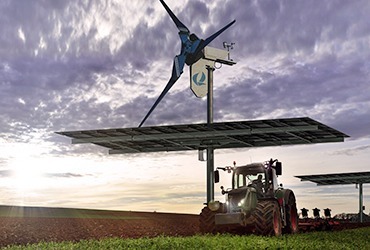
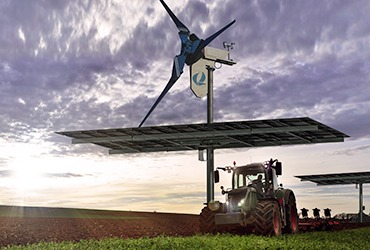
LuvSide's WindSun hybrid system is specifically designed for these scenarios: small wind turbines paired with photovoltaic (PV) modules and storage, creating a robust, modular renewable power system for off-grid and weak-grid operations.WindSun modules integrate wind and PV in one system, ensuring high supply security even in remote areas
This guide outlines a clear 7-step method for designing a hybrid WindSun system for off-grid applications, suited for:
- Mining and construction sites
- Large-scale farms and agri-PV installations
- Remote logistics depots, telecom infrastructure, rural operations
- Resorts or tourist facilities far from stable grids
You will learn how to:
- Assess loads and set reliability or uptime requirements
- Analyze wind and solar resources on site
- Select LuvSide turbines and PV setups
- Size battery storage and define needed autonomy
- Plan controls, backup, and operations for lasting security
Before You Start: Essential Prerequisites
Before equipment sizing or procurement, gather:
- Load data
- 6-12 months of energy bills, diesel logs, or generator records
- List of major loads (pumps, crushers, refrigeration, HVAC, IT, lighting, etc.)
- Site details
- GPS coordinates, altitude, brief climate description
- Available land/roof area for PV/turbine
- Notes on access, lifting, and ground conditions
- Operational and financial goals
- Uptime targets (e.g., 99%+ for critical systems)
- Limits for diesel use
- Investment plan and ESG/CO₂ reduction objectives
- Stakeholders and expertise
- Internal technical lead (facility/energy manager)
- Access to an engineering firm or LuvSide's planning support for simulations
Tip
Project schedules are often delayed by missing basic data-loads, fuel use, and future forecasts. Assign responsibility for gathering and verifying this information before supplier contact.
Step 1 - Define Your Off-Grid Use Case and Reliability Requirements
Effective hybrid microgrid design begins with understanding your needs-never with choosing kW figures in isolation.
For each site, clarify:
- Critical loads
Examples: safety systems, IT, essential production, refrigeration, key pumps. - Loads that can be shed or controlled
Such as non-essential HVAC, selected lighting, or flexible processes. - Required uptime
- Telecom towers and critical sites often aim for 99.9%+ availability.
- Agricultural or tourism sites may accept slightly less for better economics.
- Level of autonomy from renewables
Decide if diesel is for emergencies only or a regular supplement. - Future growth
Anticipate expansions (additional equipment, rooms, production lines) and include in your assumptions.
Documenting these factors will drive turbine sizing, PV capacity, battery selection, and backup strategy.
Common mistake
Don't start with "we want X kW of wind/solar." Instead: "we need Y kWh/day at Z% uptime." Always base planning on load and reliability requirements.
Step 2 - Map Your Load Profile (kWh, kW, Seasonality)
Hybrid systems are only as precise as the load data behind their design. LuvSide follows industry best practices with thorough load profiling.2Hybrid Wind Solar Storage Solutions: Complete Industrial Guide
2.1 Collect and classify loads
Prepare a table for:
- Each significant load (e.g., 15 kW crusher, 7.5 kW pump, 5 kW cooler)
- Operating hours per day and days per week
- Classification: critical, deferrable, interruptible
This provides:
- Daily energy demand (kWh/day)
- Peak power (kW) and detailed 24-hour profile
- Seasonal variation (for example, irrigation in summer, heating in winter)
2.2 Use measured data
Prioritize actual measurements:
- Smart meter or logger data
- Generator logs (fuel per hour, load runtimes)
- SCADA data from existing systems
Tip
On diesel-only sites, tracking actual generator use (kW and hours) for a few weeks yields an accurate load baseline, capturing peaks and idle periods.
This load profile is key for resource planning and for sizing turbines, PV, storage, and backup systems.
Step 3 - Profile Wind and Solar Resources On-Site
Hybrid wind-solar solutions succeed because wind and solar complement each other. LuvSide systems use wind when solar is weak-such as at night or in cloudy seasons-producing stable output.
3.1 Gather solar resource data
Key inputs:
- Global horizontal irradiance (GHI) or similar (kWh/m²/year)
- Monthly/seasonal variability
- Shadowing or orientation limitations
Source data from:
- Public solar atlases and satellite databases
- Local meteorological agencies
- On-site pyranometers (for large projects)
3.2 Gather wind resource data
Key details:
- Average wind speed at turbine hub height
- Wind speed distribution (e.g., Weibull curve)
- Directionality and turbulence, especially in complex terrain
Sources:
- National wind atlases, mesoscale models
- Weather stations or airport data nearby
- On-site measurement campaigns
Tip
For larger installations, conduct a 6-12 month on-site wind study at turbine height to improve yield estimates-essential in professional microgrid design.2Hybrid Wind Solar Storage Solutions: Complete Industrial Guide
3.3 Match resources to loads
Overlay wind and solar resource profiles onto your load curve:
- Coastal or highland sites with steady nighttime winds are ideal for overnight loads.
- Arid regions may rely on daytime solar, with seasonal wind covering winter needs.
These patterns guide the balance between generation mix and storage requirements.
Step 4 - Select the Right Hybrid Architecture and LuvSide Components
With accurate load and resource data, define your system architecture and select LuvSide hardware.
4.1 WindSun microgrid building blocks
A typical off-grid hybrid system includes:
- Wind turbines
- Solar PV arrays
- Battery energy storage (preferably lithium-based)
- Hybrid controller/power management-integrates wind, solar, storage, and backup2Hybrid Wind Solar Storage Solutions: Complete Industrial Guide
- Inverters and switchgear-ensures stable AC supply
- Optional diesel generator-as emergency reserve only
4.2 LuvSide turbines and WindSun modules
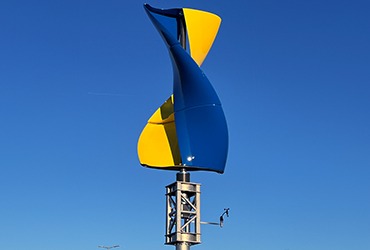
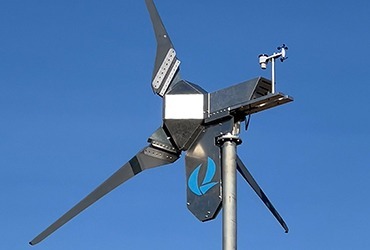
LuvSide's compact wind turbines-vertical (LS Double Helix, LS Helix) and horizontal (LS HuraKan 8.0)-address different site requirements:
- Double Helix and Helix (vertical axis): Savonius-based, robust, quiet, suitable for turbulent or urban sites.
- HuraKan 8.0 (horizontal axis): For high-yield locations; 8 kW rated at 11 m/s, up to 12,000 kWh annual output with strong wind.
WindSun modules unite wind turbines and PV, delivering up to 28 kW nominal at 11 m/s in a modular form factor
A typical off-grid installation uses one or more WindSun modules with battery storage and, if needed, a backup generator.
4.3 LuvSide's unique benefits
LuvSide's rotor and lamella technology delivers over 25% higher efficiency than standard Savonius turbines. Combined with low noise levels, robust "Made in Germany" manufacturing, and sophisticated design, WindSun is ideal for:
- Noise-sensitive environments (resorts, communities)
- Challenging or marine climates
- Projects emphasizing sustainability and quality
Common mistake
Treating wind and solar systems separately. Always integrate for unified control and shared storage for optimal results.
Step 5 - Size Wind and Solar for Your Off-Grid Power Needs
Professional designs rely on simulation, but preliminary sizing follows the same LuvSide methodology.2Hybrid Wind Solar Storage Solutions: Complete Industrial Guide
5.1 Define your renewable share
Set the renewable share of your annual consumption:
- High autonomy: 80-95% via renewables (mines, critical infrastructure)
- Hybrid diesel: 50-80% via renewables (temporary or seasonal sites)
Greater reliance on renewables calls for more diverse generation and adequate storage to meet uptime targets.
5.2 Estimate system output
For each planned configuration (e.g., two HuraKan 8.0 turbines plus a PV array), calculate:
- Annual wind production (using manufacturer's data and actual wind measurements)
- PV yield (based on local solar resource)
This is usually handled by your engineer or the LuvSide team with dedicated simulation tools.
Ensure that projected annual output exceeds total required loads, with margins for uncertainty and array losses.
Tip
Always factor in growth-slightly oversizing the system at the outset supports future expansion and cost efficiency.
Step 6 - Size Battery Storage and Determine Autonomy
Storage is essential for turning variable renewables into dependable energy supply. The guiding question: How many hours or days must storage cover without wind or sun?
6.1 Set autonomy targets
LuvSide and relevant standards recommend:renewable microgrids for industry generally require 1-3 days of battery autonomy2Hybrid Wind Solar Storage Solutions: Complete Industrial Guide. Critical or very remote operations may opt for more, balancing cost versus reliability.
Guidelines:
- 1 day: Suitable when wind/solar resources are strong and backup exists.
- 2-3 days: Common for remote operations seeking a balance of diesel reduction and reliability.
- >3 days: Justifiable only for highly critical or isolated facilities.
6.2 Battery sizing basics
A straightforward calculation:
- Multiply average daily use (kWh/day) by autonomy days for total storage needed.
- Divide by battery depth-of-discharge (DoD); 80% for most lithium types.
Example: 150 kWh/day × 2 days / 0.8 = 375 kWh usable storage.
Final designs will refine for peak power, charge rates, temperatures, and life cycle.
Common mistake
Focusing on energy (kWh) only-always ensure that the battery and inverter can supply the required peak power (kW).
Step 7 - Plan Controls, Monitoring, Compliance & Maintenance
Proper controls and maintenance planning ensure your hybrid solution delivers secure, reliable off-grid energy.
7.1 Specify control logic
Your hybrid controller should:
- Prioritize renewables for direct power
- Charge batteries during surpluses
- Use diesel backup only when storage is low or during rare load peaks
- Protect batteries from overcharge and deep discharge2Hybrid Wind Solar Storage Solutions: Complete Industrial Guide
For larger or multi-site systems, enable remote monitoring for real-time status, alarms, and performance tracking. LuvSide supports such systems.
7.2 Confirm regulatory compliance
Check:
- Electrical and CE safety compliance for all components
- Structural approval for towers (foundations, masts, corrosion resistance)
- Noise and visual impact-especially in sensitive areas
- Environmental/aviation permits as needed
Engage approvals processes early to prevent delays.
7.3 Plan long-term maintenance
LuvSide systems are optimized for long service life and low maintenance, with support throughout planning and installation. Prepare for:
- Preventive maintenance routines
- Clearly assigned roles for onsite and partner service teams
- Spare parts plans for key equipment
LuvSide installations such as the LS Double Helix 1.0 at Cape Town's V&A Waterfront demonstrate reliable operation in harsh coastal conditions. Use such examples to guide realistic performance and service planning.
Tip
Treat microgrids as core infrastructure. Defined maintenance roles and metrics (uptime, fuel savings, CO₂ reduction) help maintain lasting value.
Common Design Pitfalls to Avoid
- Incomplete load data: Leads to incorrect system sizing.
- Overlooking seasonality: Risks shortages during key periods.
- No defined backup strategy: Unclear diesel role increases risk.
- Fragmented setup: Wind, solar, and storage must be integrated.
- Skipping maintenance planning: Regular inspections are essential for top performance.
Next Steps: Putting WindSun into Practice
- Gather data
Collect load tables, energy costs, coordinates, and site layouts. - Clarify objectives
Define goals for renewables share, uptime, diesel cuts, CO₂, and payback. - Request a feasibility study
Engage a microgrid engineer or LuvSide expert for site-specific WindSun concepts and preliminary sizing. - Set a timeline
Industrial projects require 12-24 months from feasibility to operation, including permitting and procurement.Modular WindSun systems can be delivered faster with standardized components2Hybrid Wind Solar Storage Solutions: Complete Industrial Guide - Align stakeholders
Involve operations, finance, ESG, and safety teams early to ensure goal alignment and reporting readiness.
In an uncertain world-marked by fluctuating fuel prices and unreliable networks-a well-planned WindSun system is not only sustainable. It also secures operations, stabilizes costs, and builds resilience for the future.
FAQ
1. How large should my WindSun system be?
There is no one-size-fits-all answer. Most projects use tens of kW of wind/PV capacity and hundreds of kWh of storage. For example, a WindSun module (~28 kW at 11 m/s) and 100-500 kWh of battery storage can support medium farms, lodges, or facilities, depending on requirements and local resources. Accurate sizing depends on measured consumption, demand peaks, and resource analysis, ideally with expert simulation.
2. Do WindSun systems still require diesel backup?
Most off- or weak-grid sites benefit from a smaller diesel generator as backup. This maintains reliability during extended resource gaps, demand spikes, or maintenance. A modern hybrid controller minimizes generator usage, making diesel a true backup, not a main source.2Hybrid Wind Solar Storage Solutions: Complete Industrial Guide
3. How much battery autonomy is needed?
Most hybrid designs aim for 1-3 days of battery autonomy.International and LuvSide best practices recommend this as a balance for industrial sites2Hybrid Wind Solar Storage Solutions: Complete Industrial Guide. Highly isolated or mission-critical operations may need more, recognizing that each added day of storage increases investment.
4. Are small wind turbines noisy or hard to permit?
LuvSide turbines are designed for low noise and urban integration, making them easier to permit for sensitive or populated sites.LuvSide's commitment to quiet operation and design quality sets its small wind portfolio apart. Still, always review local requirements for noise, visuals, and safety, and conduct assessments as needed.
5. How long does deployment take for a WindSun system?
Major projects progress from feasibility and design to full installation in 12-24 months, depending on size and site complexity.2Hybrid Wind Solar Storage Solutions: Complete Industrial Guide Smaller or modular projects can advance faster, especially with straightforward permitting and standard components.