
Remote farms, resorts, mines, telecom towers, and critical infrastructure depend on uninterrupted power. Any outage disrupts operations and safety.
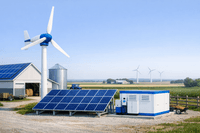
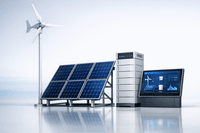
In a world with volatile fuel prices, grid instability, and rising ESG requirements, relying solely on diesel generators or a single renewable source is insufficient. A well-designed hybrid wind-solar system with battery storage transforms a vulnerable off-grid site into a resilient, autonomous energy hub.
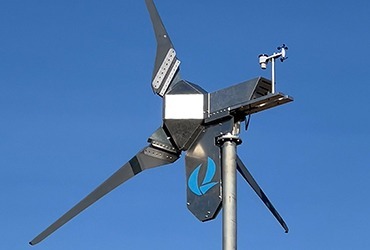
LuvSide designs efficient small wind turbines-both vertical and horizontal-and the WindSun hybrid solution, which combines wind power and photovoltaics for reliable, decentralized energy. Optimized rotor and lamella geometry deliver over 25% more efficiency than conventional small wind designs, with ultra-low noise suitable for off-grid, urban, and design-sensitive sites.
This guide details a step-by-step approach to planning and sizing a hybrid wind-solar (WindSun-type) system for standalone off-grid or remote sites.
What you will learn
By the end, you will know how to:
- Evaluate whether a wind-solar hybrid system suits your needs compared to solar- or wind-only setups
- Quantify loads and set availability targets
- Assess your site's wind and solar resources
- Choose between vertical and horizontal small wind turbines and size them with a solar array
- Design battery storage and backup solutions
- Plan installation and integration for urban, coastal, or harsh areas
- Build a cost and ROI estimate and define next steps with a technology partner
Prerequisites: What you need before you start designing
Gather the following details:
Site basics
- GPS coordinates and altitude
- Climate type (coastal, desert, alpine, urban, etc.)
Load profile
- List all loads (kW or W)
- Daily operating hours (weekday/weekend, seasonal variations)
- Distinguish between critical (must-run) and flexible (nice-to-have) loads
Availability & autonomy requirements
- Target uptime (e.g., 95%, 99%, 99.9%)
- Allowed outage duration and frequency
- Required days of autonomy (how long your system must operate without refuelling)
Resource data
- 1-3 years of wind speed data (average, distribution, turbulence) if available
- Solar data (global horizontal irradiation, peak sun hours, seasonal profile)
Constraints
- Space and height for wind turbine installation
- Roof/ground area for solar PV
- Noise, regulations, environmental constraints
- Access for transport and cranes
Commercial frame
- Budget and project lifetime
- Diesel price and escalation (for generator replacement or hybridization)
- Regulatory incentives for renewable off-grid projects
Tip: Even rough estimates are better than assumptions. Use conservative numbers and refine with your engineering partner as data improves.
Step 1 - Quantify your loads and define your objective
Every hybrid wind-solar design starts with your energy needs.
- List all loads-Pumps, refrigeration, lighting, telecom, IT, HVAC, process equipment, etc.
- Calculate daily demand (kWh/day)-For each load: Power (kW) × daily hours. Add for typical, minimum, and peak-season days.
- Identify critical and flexible loads-Critical loads must run 24/7 (e.g., telecom, safety, medical, refrigeration). Flexible loads can be shifted (e.g., EV charging, some HVAC).
- Set your objective:
- Fully replace diesel?
- Cut diesel runtime or fuel use by a percentage?
- Provide backup for grid outages?
Common mistake: Sizing by installed kW alone. Design wind and solar systems for total energy usage-not just peak power.
Step 2 - Assess your wind and solar resources
Hybrid systems succeed because wind and solar often complement each other-solar peaks at midday and in summer; wind covers nights, winters, and cloudy days.
- Gather solar data-Use irradiation data (kWh/m²/day) for estimated PV yield. Note seasonal variation, especially in higher latitudes.
- Gather wind data-On-site mast measurements or reliable datasets. Check average speed, seasonal patterns, and turbulence at turbine hub height (e.g., 12 m for LuvSide's LS HuraKan 8.0).
- Check complementarity-See if wind is strong when solar is weak. Coastal and island sites often benefit from night or winter winds.
- Match turbine to site:
- Vertical wind turbines (e.g., LS Double Helix 1.0, LS Helix 3.0): Tolerate changing wind directions, low noise, robust, urban-tolerant-best near buildings or public spaces.
- Horizontal turbines (e.g., LS HuraKan 8.0): Deliver high output in smooth, open wind fields. Rated at ~8 kW at 11 m/s and about 12,000 kWh/year in suitable locations.
Tip: Start with conservative wind assumptions if data is limited. Validate with partners who match turbine curves to resource data.
Step 3 - Decide: wind, solar, or hybrid wind-solar?
Use this framework:
When off-grid solar with storage is enough
- Year-round stable, high solar resource
- Little space/height for turbines
- Strict restrictions on turbines
- Loads: mainly daytime, can tolerate seasonality
When off-grid wind is the best choice
- Very strong, consistent wind; limited solar
- Coastal, offshore, ridge-top sites
- Limited PV area, good turbine siting
When hybrid wind-solar excels
A hybrid system is optimal when:
- Operating off-grid or with weak grids where downtime is costly
- Solar is good but seasonal, wind fills winter or night gaps
- You want to reduce battery and diesel backup size
- Loads are mixed (24/7 critical plus flexible)
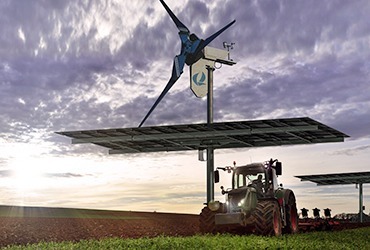
LuvSide's WindSun system integrates wind turbines and photovoltaics for a steady power supply under changing weather. In one configuration, WindSun provides about 28 kW at 11 m/s, ideal for large off-grid or clustered sites.
Common mistake: Treating wind as secondary. Efficient wind turbines often reduce battery and diesel use, improving system economics.
Step 4 - Size your generation: PV and small wind turbines
With your loads and available resources defined, size your generation assets.
4.1 Calculate target renewable production
- Daily energy target (kWh/day): Use your load calculation. Decide what portion renewables should cover (e.g., 80-100%).
- Add system losses: Account for inverters, cables, temperature, and battery efficiency. Design with adequate margin to meet targets in real conditions.
4.2 Size the solar PV
- Use local yield data (kWh/kWp/day).
- Divide required daily PV energy by the yield for PV capacity (kWp).
- Check available space for the array.
Example: For 40 kWh/day and 4 kWh/kWp/day, start with 10 kWp PV, then adjust as needed.
4.3 Size the wind component
Rely on turbine power curves and wind patterns-not just average speed.
LuvSide options include:
- LS Double Helix 1.0: 1 kW vertical turbine, high efficiency, stable operation, suitable for challenging wind.
- LS Helix 3.0: 3 kW vertical turbine, low noise, vibration reduction, robust for higher loads.
- LS HuraKan 8.0: Horizontal, ~8 kW at 11 m/s, delivers ~12,000 kWh/year in suitable sites.
Use the annual generation (e.g., 12,000 kWh/year for LS HuraKan 8.0) to determine the number of units needed.
Tip: On remote sites, prioritize fewer, high-efficiency turbines. LuvSide's design increases efficiency over 25% compared to conventional models, improving output and reducing complexity.
Step 5 - Design energy storage and backup
Storage anchors any off-grid renewable system. In a hybrid setup, it must integrate both wind and solar.
5.1 Define storage roles
- Short-term balancing between wind and solar
- Night-time coverage when solar is inactive and wind is low
- Ride-through for extended bad weather
- Grid-forming/UPS functionality for critical loads
WindSun hybrid solutions increase supply security by harnessing both resources, often reducing battery size for equivalent reliability.
5.2 Choose battery technology and autonomy
Decide with your engineering team:
- Suitable battery type and voltage
- Depth of discharge and cycle life
- Autonomy days based on risk and diesel logistics
5.3 Define backup generation
Often, a hybrid wind-solar-diesel setup is practical:
- Renewables provide most energy and run-hours
- Diesel remains for rare backup or maintenance
Common mistake: Oversizing batteries due to poor resource assessment. In windy regions, more wind capacity can be more cost-effective than extra batteries.
Step 6 - Plan siting, installation, and integration
Site and integrate your assets for optimal system performance.
6.1 Siting turbines
- Vertical turbines: LS Double Helix and LS Helix models are quiet, low-vibration, urban-tolerant. Place on rooftops, near buildings, or public areas.
- Horizontal turbines: LS HuraKan 8.0 suits open, high-wind areas; robust for varied climates.
Assess obstacles, safety clearances, corrosion risks, and storm exposure. LuvSide technology is German-made, robust, and stable in extreme conditions, onshore and offshore.
6.2 Integrating solar PV
- Maximize unshaded area, accounting for sun paths year-round
- Coordinate mounting, cabling, and maintenance with turbine locations and crane access
6.3 Electrical and control integration
Include:
- Turbine and solar inverters
- Battery management systems
- Supervisory control (SCADA/monitoring)
Tip: Standardize modular blocks for easier scaling across sites.
Step 7 - Model performance, estimate costs, and plan rollout
Finalize your preliminary design with these steps:
7.1 Model energy and reliability
- Use simulations or consult specialists to model:
- Hourly/seasonal PV and wind generation
- Battery state of charge
- Diesel runtime (if any)
- Verify your system meets uptime and autonomy goals
LuvSide supports clients from planning and simulation through to installation and maintenance, enabling reliable, autonomous energy for off-grid and critical sites.
7.2 Compare CAPEX and OPEX
Compare scenarios:
- Diesel-only or grid-plus-diesel
- Off-grid solar + storage
- Hybrid wind-solar + storage (+ optional diesel backup)
Include:
- Fuel and logistics costs
- Maintenance and spares
- Asset life and replacement
- Value from improved uptime, lower CO₂, and ESG compliance
7.3 Plan rollout and phasing
For portfolios (multiple sites):
- Launch with a pilot to test and refine the WindSun configuration
- Standardize templates for repeatable deployment
- Prioritize high-diesel, high-risk, or best wind sites
Tip: Treat your first hybrid project as a reference design to streamline future deployments.
Common mistakes and how to avoid them
Mistake 1: Ignoring seasonality
Use monthly or seasonal data for wind and solar, not just annual averages.
Mistake 2: Over-relying on diesel backup
Diesel costs rise and fuel supply can be disrupted. Make diesel a backup, not the main power source.
Mistake 3: Underestimating noise and acceptance
Quiet, low-vibration vertical turbines are critical near communities or resorts.
Mistake 4: Using turbines unsuited for turbulent sites
Vertical, turbulence-optimized LuvSide designs are built for rooftops, complex terrain, and built-up areas.
Next steps: From concept to bankable hybrid project
Designing a hybrid system requires:
- Thorough load and resource assessments
- Matching technology (vertical/horizontal wind, PV, storage) to your needs
- Clear, data-driven cost and reliability projections
LuvSide specializes in efficient, quiet small wind turbines and WindSun hybrid solutions for decentralized, autonomous power worldwide-supported by consulting, planning, installation, and maintenance.
If you manage remote agricultural, resort, telecom, mining, or critical infrastructure, a hybrid wind-solar system can reduce fuel use, secure supply, and enhance your sustainability profile.
Use this 7-step guide as your foundation, then engage with hybrid system engineers to create your complete project plan.
FAQ: Hybrid wind-solar systems for remote off-grid sites
1. Is a hybrid wind-solar system always better than solar alone?
Not always. Areas with stable, strong solar and weak wind may suit solar with storage best. Where wind covers nights, winters, or cloudy spells, hybrid systems improve reliability and reduce storage needs. LuvSide's WindSun concept combines both for supply security where conditions require it.
2. How do I choose between vertical and horizontal wind turbines?
Choose based on site features:
- Vertical turbines (LS Double Helix 1.0, LS Helix 3.0): For turbulent, changing wind, urban or noise-sensitive areas, onshore/offshore.
- Horizontal turbines (LS HuraKan 8.0): For open, high-wind areas, maximizing output per mast.
Hybrid projects can combine both if site conditions vary.
3. Can a hybrid wind-solar system fully replace diesel generators?
Yes, if wind, solar, and storage are sized for worst-case conditions. Often, a small diesel generator remains for rare backup or maintenance. Well-designed WindSun systems minimize diesel reliance, treating it as a last-resort backup.
4. How noisy are small vertical wind turbines in hybrid systems?
LuvSide's vertical turbines operate quietly thanks to streamlined rotor and lamella design and lightweight construction, making them suitable for urban, resort, and community locations.
5. Where has LuvSide technology been deployed?
LuvSide turbines have installations in Germany, Saudi Arabia, South Africa, and the Netherlands, both onshore and offshore. Notable projects include Cape Town's V&A Waterfront with LS Double Helix 1.0 turbines, demonstrating robustness in coastal and urban settings-valuable references for your own hybrid system.