

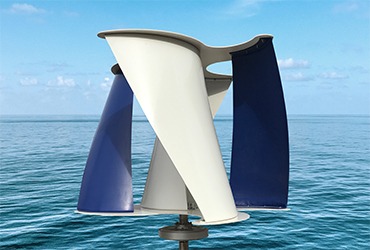
In a world marked by volatile energy prices, grid instability, and increasing sustainability expectations, project developers and facility managers seek reliable off-grid and hybrid power solutions. Small wind turbines-especially when paired with solar PV and storage-have become strategic assets for farms, remote clinics, industrial sites, marinas, and even city rooftops.
LuvSide develops and manufactures small vertical and horizontal wind turbines in Germany, emphasizing decentralized, autonomous power supply for windy regions worldwide. The portfolio spans from compact vertical turbines (starting at 0.5 kW) to an 8 kW horizontal turbine and a ~28 kW wind-solar hybrid system, addressing both urban and remote applications.
This guide supports decision-makers in companies, municipalities, and organizations evaluating small wind turbines or wind-solar hybrid systems for:
- Off-grid farms and agri-PV projects
- Remote tourism sites, resorts, and marinas
- Telecom towers, industrial sites, and construction or mining camps
- Urban rooftops and mixed-use buildings
You will find a structured, seven-step process, a product-by-product review of LuvSide solutions, and a comparison table to guide your next investment decision.
Quick recommendations: which LuvSide solution fits which scenario?
For a fast overview, here's how LuvSide's main options match typical applications:
Best for wind-rich off-grid microgrids and industrial loads
-> LS HuraKan 8.0 - horizontal wind turbine (~8 kW at 11 m/s, ~12,000 kWh/year in suitable sites), designed for high output and durability in demanding climates.Best for remote clinics, farms, and small commercial buildings
-> LS Helix 3.0 - 3 kW vertical turbine with a compact, urban-friendly design and quiet operation, suitable onshore and offshore.Best for city rooftops and design-sensitive urban projects
-> LS Double Helix 1.0 - 1 kW vertical turbine with optimized rotor and lamella geometry; operates quietly and manages turbulent, multi-directional winds-ideal for urban settings.Best for marinas, waterfronts, and space-constrained coastal sites
-> LS Double Helix 0.5 Marina - 0.5 kW vertical turbine; the most compact model, ideal for yacht and harbour operators valuing quiet, integrated equipment.Best for 24/7 off-grid autonomy and diesel reduction
-> WindSun hybrid system - combined wind and solar PV, ~28 kW nominal at 11 m/s; designed for high supply security in remote or grid-weak locations.
Use these as starting points. The following guide explains how to validate and refine your selection.
Why small wind and hybrid systems make sense in uncertain times
Many remote and edge sites still rely on diesel generators. Fuel supply challenges, price fluctuations, and stricter ESG requirements push operators toward cleaner, autonomous alternatives. LuvSide's turbines and hybrid systems offer a modular, modern alternative to diesel and PV-only setups.
Key advantages of high-efficiency small wind turbines or wind-solar hybrids:
- Greater energy autonomy - wind resources are available at night and in winter, complementing solar PV and reducing storage needs.
- Higher resilience - decentralized generation maintains critical loads during grid failures or supply disruptions.
- Improved cost stability - once installed, hybrid renewable systems shield users from fuel price swings.
- Tangible sustainability - visible small wind turbines demonstrate environmental commitment, supporting green building and sustainability goals.
LuvSide turbines are deployed in Germany, Saudi Arabia, South Africa, and the Netherlands, including a reference project with four LS Double Helix 1.0 turbines at Cape Town's V&A Waterfront (inaugurated in May 2024). This exemplifies urban-compatible wind power in a challenging coastal setting.
What to consider when choosing a small wind turbine
Before reviewing products, clarify your main selection criteria.
1. Application and role in your energy mix
Clarify:
- Is the turbine primary power (off-grid or microgrid) or supporting power (grid-connected, backup for critical loads)?
- Are you targeting 24/7 autonomy or primarily reducing costs and CO₂ emissions?
- How sensitive are your operations to power interruptions (e.g., clinics, telecom towers, data centers vs. less-critical loads)?
2. Wind resource and site quality
Small wind projects are site-dependent. Assess:
- Average wind speed and distribution at hub height
- Turbulence (influenced by buildings, trees, structures)
- Prevailing wind directions and obstacles
- Possible mast heights and any structural constraints
Professional assessments are recommended; at minimum, rely on reputable wind maps, on-site measurements, and experienced partners.
3. Turbine architecture: vertical or horizontal
Small wind turbines come in two primary architectures, both available from LuvSide.
Vertical-axis turbines (VAWTs) (LS Double Helix 1.0, LS Helix 3.0, Double Helix 0.5 Marina):
- Capture wind from any direction without yaw mechanisms
- Perform well in turbulent, variable wind-ideal for urban and complex sites
- Operate quietly at lower tip speeds-suited for urban environments
- Integrate visually with buildings and public spaces
LuvSide's vertical turbines use an innovative helix-shaped rotor with optimized lamella geometry, increasing aerodynamic efficiency and stability compared to conventional Savonius designs.
Horizontal-axis turbines (HAWTs) (LS HuraKan 8.0):
- Resemble traditional three-blade wind generators
- Achieve high efficiency in steady, unobstructed wind
- Best for wind-rich rural or coastal sites with space for a tall mast
Select based on site characteristics-open, steady-wind environments favor horizontal turbines; complex, turbulent conditions favor vertical designs.
4. Efficiency and rotor/lamella design
Turbines with the same nominal power can deliver very different annual energy yields due to design. LuvSide's streamlined rotor and lamella geometry yields up to 25% higher efficiency than conventional small Savonius turbines, particularly in low- and medium-wind conditions.
Compare:
- Power curves (kW vs. wind speed)
- Estimated annual yields at various wind speeds
- Cut-in speed (when generation starts)
- Performance in gusty or stormy weather
5. Noise, aesthetics, and urban suitability
Noise and visual impact are crucial for city wind turbines, resorts, marinas, or installations near residences. LuvSide's vertical turbines ensure low-noise, low-vibration operation and blend well with urban architecture, enabling projects that require quiet, visually appealing energy solutions.
6. Integration with PV, storage, and diesel
Modern systems combine small wind turbines with PV, batteries, and sometimes diesel backup. Wind typically generates more at night and in winter; solar peaks at midday. LuvSide's WindSun hybrid system integrates wind and solar to deliver continuous power and reduce storage and diesel use in off-grid settings.
When evaluating suppliers, consider:
- DC/AC integration and inverters
- Battery and control systems
- Compatibility with existing generators
- Options for remote monitoring
7. Maintenance, service, and total cost of ownership
A small wind system is a long-term investment-asset life often spans 20 years. Consider ongoing operation and maintenance (O&M) as much as upfront costs.
LuvSide provides end-to-end services: consulting, planning, installation, commissioning, and maintenance, backed by international partner networks. Turbines are engineered for robust, low-maintenance operation, including in harsh coastal and offshore conditions.
Assess:
- Maintenance intervals
- Spare parts logistics
- Service contracts and response times
- Lifetime and performance guarantees
7 practical steps for selecting the right small wind system
Step 1: Define your energy objectives and critical loads
Clarify:
- Which loads are critical for continuous operation?
- Is your goal full off-grid autonomy, diesel reduction, or grid bill and CO₂ reduction?
- How much autonomy do you need during low wind and sun periods?
For example, a clinic may prioritize reliable refrigeration and communications, while an industrial site may aim to reduce diesel runtime.
Step 2: Build a load and autonomy profile
Develop a sizing worksheet for your key loads:
| Load category | Power (W) | Hours/day | Energy (Wh/day) |
|---|---|---|---|
| LED lighting | 200 | 6 | 1,200 |
| Network / IT & control systems | 150 | 24 | 3,600 |
| Water pump(s) | 800 | 2 | 1,600 |
| Refrigeration / medical cold chain | 400 | 24 | 9,600 |
| Misc. outlets, phone charging, tools | 200 | 4 | 800 |
| Total | - | - | 16,800 Wh/day (~16.8 kWh/day) |
Key steps:
- Convert Wh/day to kWh/day.
- Add a 20-30% margin for losses and growth.
- Multiply by 365 for annual demand.
- Allocate demand between wind and PV based on resources.
For reference, an LS HuraKan 8.0 can provide ~12,000 kWh/year at 11 m/s, covering a large share of a typical remote clinic's demand at good wind sites. At moderate sites, combine smaller vertical turbines with PV and storage.
Step 3: Assess your wind resource and site constraints
Check:
- Wind maps, on-site measurements, and nearby weather stations
- Seasonality-European and coastal sites often have more wind in winter
- Turbulence due to structures or terrain
- Available mounting options (roofs, masts, piers)
Strong, stable winds favor horizontal turbines; turbulent, multi-directional winds are better handled by vertical models.
Step 4: Choose vertical or horizontal turbines
Use these rules of thumb:
Vertical turbines (LS Double Helix 1.0, LS Helix 3.0, Double Helix 0.5 Marina):
- Urban, industrial, or coastal sites
- Where noise and aesthetics matter
- Robustness needed for onshore/offshore installations
Horizontal turbines (LS HuraKan 8.0):
- Wind-rich, open sites
- Higher output for microgrids or industry
- Sufficient space for tall masts
Many projects combine wind and PV for optimal performance.
Step 5: Choose standalone wind or wind-solar hybrid
Don't rely on a single source off-grid-hybridizing wind with solar and storage increases security.
LuvSide's WindSun hybrid combines wind turbines and PV for steady power even in variable weather. Wind provides night and winter generation, while PV covers daytime loads.
Hybrid systems excel for:
- Diesel-free guest experiences at remote resorts
- Reducing fuel deliveries and improving ESG for mining/construction
- Farms needing reliable winter supply without oversizing batteries
- Critical infrastructure close to UPS-level resilience
Step 6: Map LuvSide turbine models to your site
Match models to need:
- LS Double Helix 1.0 (1 kW, vertical) - for modular rooftop, campus, or hybrid builds
- LS Helix 3.0 (3 kW, vertical) - for larger single buildings, farms, marinas
- LS Double Helix 0.5 Marina (0.5 kW, vertical) - for compact, space-constrained sites
- LS HuraKan 8.0 (8 kW, horizontal) - for wind-rich microgrids and industrial sites
- WindSun hybrid - for fully off-grid or weak-grid sites prioritizing uptime
Typically, engineering partners provide yield simulations to determine the number and mix of turbines and PV.
Step 7: Evaluate total cost of ownership and vendor fit
Compare not just turbine price but:
- Capital expenses: turbines, masts, foundations, balance of plant
- PV, storage, generator integration
- O&M costs, service life
- Local partner and spare part availability
LuvSide offers high-efficiency, quality "Made in Germany" turbines, combined with comprehensive planning, installation, and service for reliable, long-term decentralized energy projects. This adds value for operators seeking predictable lifecycle performance.
LuvSide small wind and hybrid solutions: product overview
LS Double Helix 1.0 - 1 kW vertical turbine
Overview
A 1 kW vertical wind turbine with helix-shaped rotor and optimized lamella geometry, delivering efficient, stable operation in variable winds. Suitable for urban or remote sites, this quiet, robust design is ideal for decentralized energy applications.
Pros
- Good efficiency at low wind speeds
- Very quiet and low-vibration
- Robust, lightweight construction; onshore and offshore capable
- Minimal maintenance, easy servicing
- Aesthetic design integrates with buildings and public spaces
Considerations
- 1 kW output fits smaller loads or modular arrays
- Yield depends on detailed site conditions
Best for
- Urban rooftops, campuses, and promenades
- Resorts and public projects needing quiet, visible renewables
- Supplemental generation in hybrid systems for farms or remote sites
Pricing
- Project-specific; provided via B2B sales or partners, bundled with planning, installation, and optional hybrid integration
LS Helix 3.0 - 3 kW vertical turbine
Overview
A 3 kW vertical wind turbine applying the same lamella design as Double Helix 1.0, designed for higher power needs in both onshore and offshore settings.
Pros
- Higher output for larger buildings or clusters
- Quiet, low-vibration; suitable for hospitality
- Durable in harsh climates
- Flexible mounting, compact footprint
- Low maintenance
Considerations
- Remains a small wind solution; for large loads, combine with PV and/or multiple turbines
Best for
- Agri-PV and farms seeking winter/night wind output
- Remote clinics or commercial sites
- Coastal resorts/marinas prioritizing design and quietness
Pricing
- Project-based; varies by tower height, site, and integration; available via LuvSide and regional partners
LS Double Helix 0.5 Marina - 0.5 kW vertical turbine
Overview
LuvSide's most compact turbine-a vertical solution for harbour, marina, and other installations with limited space. Shares the low-noise, maintenance, and design advantages of larger Helix models.
Pros
- Small footprint and mass-good for space or structural constraints
- Quiet, urban-tolerant
- Modular, suitable for distributed deployment
Considerations
- Best for lower loads or as a visible sustainability component
- For substantial power, combine with PV or multiple turbines
Best for
- Marinas, yacht clubs, harbour facilities
- Buildings with limited structural/mounting capacity
- Architectural or educational projects highlighting micro wind
Pricing
- Project-specific; bundled with mounting and integration, via partners
LS HuraKan 8.0 - 8 kW horizontal turbine
Overview
A horizontal, small wind turbine delivering about 8 kW at 11 m/s-a robust choice for high-output requirements in wind-rich, open settings.
Pros
- High per-turbine output
- Aerodynamically optimized for strong winds
- Built for diverse, harsh climates
- Designed for efficient maintenance
Considerations
- Suited for open, rural/windy sites; vertical turbines are better for turbulent/urban locations
- For sensitive sites, detailed siting studies are advised
Best for
- Off-grid farms and agri-industry
- Mining, construction, and industrial microgrids
- Remote communities and infrastructure
Pricing
- Project-tailored; depends on site, masts, foundations, and grid/off-grid setup
WindSun hybrid system - integrated wind-solar solution
Overview
WindSun combines wind turbines and PV arrays to provide permanent power for off-grid or grid-weak environments. Standard configurations deliver ~28 kW nominal at 11 m/s, with system size and hybrid mix tailored per project.
Pros
- Reduces storage and diesel needs compared to PV-only
- High autonomy and resilience; well-suited for critical sites
- Modular and scalable
- Single-source solution: turbines, PV, controls, and services in one system
Considerations
- Requires integrated planning
- Upfront investment is higher, but operating costs are lower long-term
Best for
- Remote hotels/resorts avoiding diesel logistics
- Mines, industrial sites reducing fuel costs
- Critical infrastructure (telecom, health, water)
Pricing
- Engineered per project, based on size, hybrid mix, storage, and controls; proposals are detailed and site-based
Comparison table: LuvSide solutions at a glance
| Product | Type / Nominal Power | Best for | Typical sites | Key advantages | Hybrid role |
|---|---|---|---|---|---|
| LS Double Helix 1.0 | Vertical, ~1 kW | Urban & mixed-use projects | Rooftops, campuses, promenades | Quiet, efficient at low wind, urban-tolerant design | Often paired with PV |
| LS Helix 3.0 | Vertical, ~3 kW | Higher-demand buildings & farms | Agri-PV, clinics, resorts, marinas | Robust, low-vibration, on/offshore compatible | Strong PV complement |
| LS Double Helix 0.5 Marina | Vertical, ~0.5 kW | Space-constrained & coastal applications | Marinas, harbours, small buildings | Very compact, quiet, modular arrays | Adds resilience to PV |
| LS HuraKan 8.0 | Horizontal, ~8 kW @ 11 m/s | Wind-rich off-grid & industrial microgrids | Farms, industry, remote communities | High yield at good sites, rugged design | Core of hybrid/microgrid |
| WindSun hybrid | Wind-solar hybrid, ~28 kW* | 24/7 autonomy & diesel reduction | Resorts, mines, telecom, critical services | Redundancy, security, modular system | Complete hybrid backbone |
*Nominal at 11 m/s; sizing is project-dependent.
Putting it all together: which small wind turbine is right for your project?
- For wind-rich, remote farms or industrial sites, start by evaluating LS HuraKan 8.0, possibly combined with PV or a WindSun hybrid.
- For marinas, resorts, or urban waterfronts, vertical Helix turbines (Double Helix 0.5 Marina, Double Helix 1.0, Helix 3.0) offer quiet operation and design integration while advancing your sustainability goals.
- For city rooftops, mixed-use buildings, or campuses, vertical turbines (Double Helix 1.0, Helix 3.0) balance efficiency, low noise, and architectural fit.
- For critical infrastructure, telecom, or health sites, focus on a hybrid design (WindSun) using wind, PV, and storage for robust uptime.
The optimal mix depends on your load profile, available wind and solar resources, and regulatory context. Working with experienced small wind and hybrid integrators like LuvSide-offering planning, installation, and lifecycle support-creates a technically sound, sustainable, and economically robust project.
FAQ: Small wind turbines for remote and urban applications
How much maintenance is required?
Modern small wind turbines are low-maintenance. Expect periodic (annual or bi-annual) inspections for mechanical, electrical, and safety components. LuvSide designs for robust, service-friendly onshore and offshore operation.
Are small wind turbines noisy?
LuvSide vertical Helix turbines are engineered for quiet, low-vibration performance, making them suitable for residential, hospitality, and public environments. Final noise levels depend on siting and local regulations; acoustic studies are recommended for sensitive projects.
Can small wind turbines power an entire site?
At wind-rich sites and with correct sizing, small wind can supply a large share of site demand (e.g., LS HuraKan 8.0 yields ~12,000 kWh/year at 11 m/s). Most users prefer hybrid systems-combining wind, PV, storage (and, if needed, diesel)-to ensure reliable, cost-effective operation throughout the year.
When does a wind-solar hybrid make sense versus PV-only?
Hybrid systems are best when:
- There is significant winter or night-time demand
- Space for PV is limited
- Diesel logistics are challenging
- Regulatory or ESG goals require higher renewable coverage
Wind complements solar, increasing autonomy and reducing storage and diesel requirements.
Are LuvSide systems right for residential homes?
LuvSide focuses on B2B and project-scale deployments (e.g., farms, commercial buildings, marinas, and critical infrastructure). Small residential or mixed-use buildings may benefit from LS Double Helix 1.0 with adequate wind, structural capacity, and regulatory approval. A professional feasibility study is essential to confirm suitability.