
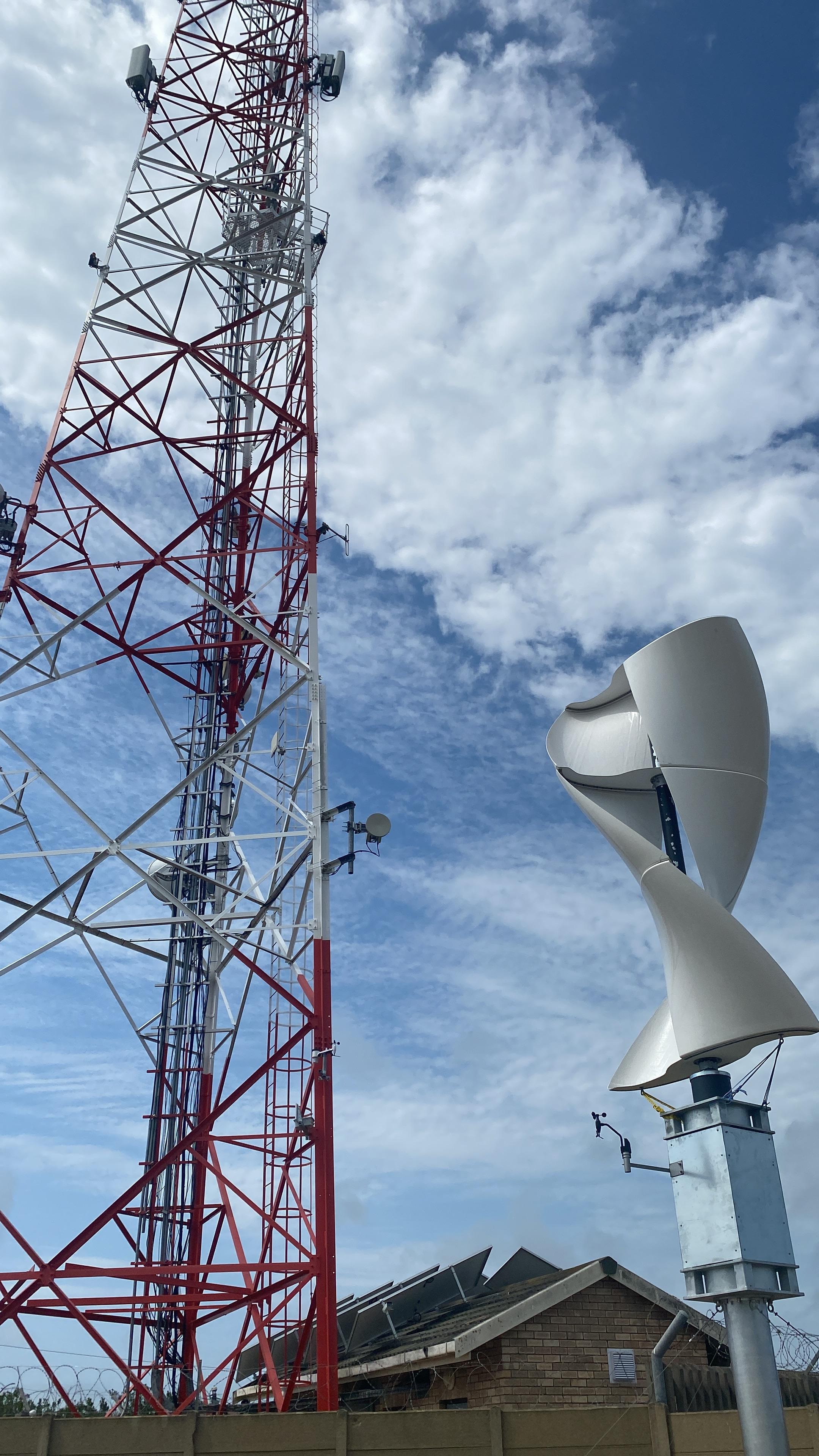
Executive summary: Municipalities and industrial operators with off-grid or weak-grid sites face rising pressure to reduce diesel reliance, control energy costs, and enhance resilience. This article quantifies how LuvSide small wind turbines and hybrid wind-solar systems impact total cost of ownership, mitigate risk, and support regulatory needs in demanding off-grid environments.
Using industry benchmarks and LuvSide's technical data, we present a pragmatic ROI framework for assessing decentralized wind power as part of robust, future-proof energy solutions.
1. Why off-grid municipal and industrial sites are rethinking energy
Remote waterworks, wastewater plants, depots, telecom hubs, ports, mines, and industrial parks face three key challenges:
- Volatile diesel prices and complex fuel logistics
- Increased outage risks with weak or overloaded grids
- Regulatory and stakeholder expectations for renewable energy and CO₂-reduction
Off-grid and mini-grid renewables are expanding rapidly. In 2022 alone, about 1.2 GW of renewable off-grid and mini-grid systems were installed worldwide, raising global capacity to 12.4 GW[1]-primarily solar, but with increasing adoption of wind and hybrid solutions.
For critical municipal and industrial sites, the question has shifted from whether to integrate renewables to which combination of wind, solar, storage, and backup ensures optimal ROI and reliability.
2. Baseline economics: the true cost of diesel-only generation
Understanding the actual costs of diesel-only systems is essential before evaluating alternative solutions.
2.1 Fuel cost per kWh
Modern industrial diesel generators typically consume:
- Approximately 0.27-0.35 liters of diesel per kWh at optimal load (60-80% of rated power)[2]
- Roughly 1 liter of diesel produces 3.5-4 kWh of electricity with a well-matched genset[3]
With a conservative remote site diesel price of 1.50 €/L (including delivery), fuel alone costs:
- Lower bound: 0.27 L/kWh × 1.50 €/L ≈ 0.41 €/kWh
- Upper bound: 0.35 L/kWh × 1.50 €/L ≈ 0.53 €/kWh
This calculation excludes generator maintenance and overhaul costs.
2.2 O&M, overhaul, and logistics
Additional typical costs:
- Preventive and corrective maintenance
- Oil changes and consumables
- Spare parts and major overhauls at set intervals
- Fuel transport logistics (hauling, access, security)
Combined, these factors frequently add 0.05-0.10 €/kWh or more to lifecycle costs. For remote or challenging regions, logistics and downtime can push the effective levelized cost of diesel to 0.60-0.80 €/kWh or higher.
2.3 Unpriced risk: value of lost load
For municipal and industrial operations, outages can cost more than fuel:
- Industrial and commercial VoLL values range from a few €/kWh to over 250 €/kWh depending on sector[4]
- For some German industries, macroeconomic studies estimate interruption costs around 0.5 €/kWh, similar to generating peak power with gas turbines[5]
Even at low VoLL, a 200 kW process offline for a few hours can mean tens of thousands of euros in lost output, urgent repairs, penalties, or reputation risk.
Conclusion: Diesel-only systems pose hidden costs and operational risks that go beyond fuel invoices and directly affect true ROI.
3. LuvSide small wind and hybrid systems
LuvSide specializes in small wind turbines for decentralized energy, offering both vertical- and horizontal-axis models tailored for challenging sites.
3.1 Product snapshot
Key systems for municipal and industrial off-grid use:
LS HuraKan
- Approx. 8 kW rated output at 11 m/s, with annual yields ~12,000 kWh at strong sites
- 6 m rotor diameter
- Designed for robust on- and offshore applications
Vertical-axis turbines (Savonius helix)
- LS Double Helix 1.0 (1 kW), LS Helix 3.0 (3 kW), and LS Double Helix 0.5 Marina (0.5 kW) for small/medium loads, including marine environments
WindSun hybrid system
- Pre-configured wind-solar hybrid with approx. 28 kW output at 11 m/s (wind + PV)
- Integrates wind turbines, PV, and electronics into one cohesive off-grid unit
3.2 Design differentiators
LuvSide turbines are engineered for demanding, harsh conditions:
- Aerodynamic and lamella designs provide over 25% higher efficiency than standard Savonius turbines
- Lightweight, robust, and low-noise construction, suitable for urban and sensitive environments
- Made in Germany-built for durability and reliability in severe weather, onshore and offshore
- Full-scope services: planning, installation, inspection, and maintenance
LuvSide turbines operate successfully in Germany, Saudi Arabia, South Africa, and the Netherlands, including a showcase pilot at Cape Town's V&A Waterfront. These deployments prove performance across various climates and wind conditions-from temperate Europe to coastal Africa.
4. Cost of energy from small wind in context
A realistic ROI assessment starts with understanding the lifetime cost of energy from small wind compared to diesel.
4.1 Capacity factor and full-load hours
Example: HuraKan 8.0
Rated power: 8 kW
Annual yield: ~12,000 kWh/year at a suitable site
Full-load hours ≈ 12,000 kWh ÷ 8 kW ≈ 1,500 hours/year
Capacity factor ≈ 1,500 ÷ 8,760 ≈ 17%
These figures align with good onshore small-wind sites, where high-quality turbines achieve 1,500-2,000 full-load hours annually, subject to site wind resource and hub height.[8]
4.2 Industry benchmarks for small wind LCOE
Independent analyses indicate:
- Small wind LCOE often falls in the 0.15-0.35 USD/kWh range under good wind conditions[9]
- Typical turnkey investments: 2,500-7,500 €/kW, influenced by turbine type, tower, logistics, and labor[9]
Even before factoring carbon costs or diesel logistics, well-sited small wind is competitive, sometimes even cheaper than diesel (0.40-0.53 €/kWh at 1.50 €/L fuel price).
4.3 Why hybrid wind-solar outperforms single-technology systems
While solar PV offers a low LCOE, it mainly produces energy during daylight and varies seasonally. Wind generation often peaks at night or in opposite seasons. For off-grid and weak-grid operations, the synergy between wind and solar offsets the variability of each.
By combining:
- PV for daytime generation
- LuvSide wind turbines for nighttime or cloudy/windy periods
- Storage and/or diesel backup for rare low-resource conditions
...operators reduce the need for oversized storage, limit diesel use, and improve overall reliability. This is the strategic value of hybrid decentralized energy solutions.
5. ROI methodology for LuvSide-based hybrid systems
A robust assessment follows a clear, stepwise approach. A standard ROI calculation for a municipal or industrial off-grid site includes:
5.1 Define load and reliability requirements
- 12 months (or more) of hourly or 15-minute load data
- Identifying critical vs. non-critical loads
- Target uptime (e.g., 99.9% vs. 99.99%)
- Battery depth-of-discharge and acceptable diesel use
5.2 Quantify baseline costs
For diesel-only operations, measure:
- Annual kWh produced
- Yearly fuel consumption and cost
- O&M and overhaul expenditure
- Outage history and financial impact using VoLL
Yielding:
Baseline energy cost per kWh = (Fuel + O&M + Logistics + Outage cost) ÷ kWh
5.3 Dimension the hybrid system
With LuvSide and engineering support:
- Model local wind and solar potential
- Select turbine type and quantity (e.g., HuraKan 8.0 or vertical Helix variants)
- Define PV array and storage size
- Set operation strategy: wind+PV as primary, diesel as backup or as a fully islanded microgrid
5.4 Estimate investment and operating costs
Using relevant quotes and benchmarks:
- Turbines and towers (€/kW)
- PV system (€/kWp)
- Storage (€/kWh; large systems in Germany: ~310-465 €/kWh)[10]
- Inverters, controls, grid compatibility
- Construction, engineering, logistics
- Annual O&M budget for each system component
5.5 Model energy flows and diesel reduction
Hybrid simulations provide:
- Annual kWh from wind, PV, and diesel
- Storage cycling profiles
- Remaining diesel runtime and liters/year
- Expected decrease in outage frequency and duration
Resulting in:
Hybrid LCOE = Discounted (CAPEX + OPEX) ÷ Discounted lifetime kWh
Net annual savings = Baseline annual cost - Hybrid annual cost
Simple payback = Additional investment ÷ Net annual savings
Further metrics include project NPV and IRR.
6. Example: Remote municipal water treatment plant
A simplified scenario:
6.1 Site and load profile
- Average load: 30 kW
- Annual use: ≈ 262,800 kWh
- Current supply: 200 kVA diesel genset, ~6,000 h/year
- Diesel delivered: 1.50 €/L
- Consumption: 0.30 L/kWh
Baseline annual fuel cost:
- 262,800 kWh × 0.30 L/kWh × 1.50 €/L ≈ 118,260 €/year
Add O&M (~10,000 €/year) and minor outage impacts for 130,000-140,000 €/year total power spend.
6.2 Hybrid concept with LuvSide WindSun
- One WindSun system (~28 kW wind+PV at 11 m/s)
- Additional PV to reach 40-50 kWp
- Battery storage for several hours autonomy
- Diesel retained as backup
At a favorable site, the WindSun and PV could supply:
- 40-60% of annual kWh from wind
- 30-40% from PV
- 10-30% from diesel (based on storage size and uptime target)
In a conservative scenario:
- 55% of energy from wind+PV ≈ 144,540 kWh/year
- 45% from diesel ≈ 118,260 kWh/year
Diesel savings:
- 144,540 kWh displaced/year = 43,362 L/year
- Fuel cost avoided: 43,362 L × 1.50 €/L ≈ 65,000 €/year
A hybrid setup can thus reduce diesel costs by ~50-60% before accounting for reduced outages or CO₂ impact.
6.3 Payback illustration (not a LuvSide offer)
With typical industry cost ranges:
- Small wind: 2,500-7,500 €/kW[9]
- PV: 700-1,200 €/kWp for commercial systems[11]
- Storage: ~310-465 €/kWh (Germany)[10]
A 28 kW wind + 40 kWp PV + 200 kWh storage system might total ~350,000 € turnkey. With annual diesel savings around 65,000 €/year:
350,000 € ÷ 65,000 €/year ≈ 5.4 years simple payback
Over 20 years, conservative estimates yield:
- Double-digit IRR
- Resilience against fuel price swings
- Significant CO₂ reduction and regulatory compliance
Note: These are illustrative. Actual ROI depends on site resources, local costs, and detailed design; LuvSide customizes solutions based on real project data.
7. Quantifying reliability and resilience benefits
Beyond cost per kWh, avoided downtime enhances operational value.
7.1 Outage costs in practice
VoLL studies show a range:
- Few €/kWh in non-critical areas
- Up to hundreds €/kWh for sensitive or high-value operations[4]
Even with a modest 5 €/kWh VoLL, a four-hour outage at 200 kW costs:
200 kW × 4 h × 5 €/kWh = 4,000 €
Annual outage losses can reach tens of thousands of euros, considering lost output, rework, and penalties.[12]
7.2 How hybrid wind-solar boosts resilience
LuvSide hybrid systems improve reliability by:
- Generating during nights and low-sun periods
- Maintaining critical loads without immediate diesel startup
- Enabling N-1 redundancy (PV, wind, diesel, storage)
- Enabling controls prioritizing essential loads
On weak grids, a LuvSide hybrid makes the grid one of several energy sources, not a single failure point.
7.3 Assigning value to reliability
For our example water plant:
- 10 hours/year of interruptions × 30 kW × 5 €/kWh = 1,500 €/year in direct outage impact
In many cases, outages and VoLL are higher, making downtime avoidance a strong ROI lever.
8. Regulatory, ESG, and strategic benefits
LuvSide small wind systems add value beyond direct economics:
- CO₂ reduction and ESG reporting: Wind and solar replace diesel generation, cutting Scope 1 emissions and improving sustainability alignments
- Compliance: Supporting renewable and climate targets for public and industrial infrastructure
- Public perception: Quiet and visible turbines and PV highlight sustainability commitment, supporting funding, acceptance, and investor confidence
- Future cost control: Wind and solar assets provide long-term price stability versus volatile diesel
LuvSide's focus on decentralized energy autonomy and hybrid design matches current regulatory and ESG priorities.
9. How LuvSide supports municipal and industrial off-grid customers
LuvSide delivers not just products, but solutions:
Tailored system design
- HuraKan 8.0 for high yields on tall masts
- Vertical Helix turbines for urban or turbulent locations
- WindSun platforms integrating wind, PV, and controls
End-to-end project support
- Site assessment and system design
- Engineering, integration, and microgrid support
- Installation, commissioning, and staff training
- Ongoing maintenance and inspection
Proven references
- Installations across Europe, the Middle East, and Africa, including challenging environments
LuvSide is a practical partner for municipal and industrial clients seeking reliable, bankable hybrid energy solutions.
10. Comparative view: diesel-only vs. PV-only vs. PV + LuvSide hybrid
| Dimension | Diesel-Only | PV-Only (with storage) | PV + LuvSide Small Wind + Storage |
|---|---|---|---|
| CAPEX | Low, no renewables | Medium-high (PV + storage) | Medium-high (PV + wind + storage) |
| OPEX (fuel + O&M) | Very high, fuel-driven | Low, mainly maintenance | Low-medium; major fuel savings |
| Fuel dependency | 100% | 0% (if fully islanded) | 10-40% (diesel as backup) |
| Typical LCOE | 0.40-0.80 €/kWh+ | Competitive, but storage costs for 24/7 supply | Often below diesel; competitive with PV-only due to reduced storage |
| Night / low-sun coverage | Diesel only | Batteries (size/cost variable) | Wind + smaller battery; diesel in rare cases |
| Outage risk | High (single tech, engine failures) | Medium (weather, storage) | Low (diversified sources) |
| Emissions & ESG | High CO₂, noise | Very low | Very low (diesel operation minimized) |
Hybrid wind-solar systems offer the operational efficiency of renewables with improved reliability for off-grid energy needs in uncertain environments.
11. Actionable next steps for municipalities and industrial operators
A stepwise approach for assessing LuvSide small wind solutions:
- Collect baseline data
- 12-24 months of load and fuel data
- Outage logs and costs
- Energy-related expenditure
- Assess site resources and constraints
- Wind and solar data
- Site, roof, and noise limitations
- Conduct a pre-feasibility study
- Compare diesel-only, PV-only, and PV + wind options
- Calculate LCOE, payback using real data
- Develop a tailored concept with LuvSide
- Select turbines and system configuration
- Plan phased rollout as needed
- Make the business case
- Quantify fuel and OPEX savings
- Assign value to reliability (VoLL-based)
- Integrate CO₂ and compliance benefits
- Plan ongoing operations
- Define O&M roles and monitoring
This methodical process turns decentralized renewables from aspiration into bankable infrastructure decisions.
Frequently Asked Questions
How much diesel can a PV + LuvSide hybrid system displace?
Diesel displacement depends on local wind/solar resources, usage patterns, and storage. Well-designed systems typically cut diesel by 50-80%; in the example above, a 55% reduction is plausible, with even greater savings at optimal sites.
What payback period can small wind offer off-grid?
Properly sited turbines and high diesel prices enable 4-8 year paybacks-especially in PV + storage hybrids. This reflects small-wind LCOE of 0.15-0.35 USD/kWh-competitive with or below diesel.[9] Site specifics drive actual results.
How do LuvSide turbines perform in harsh or coastal conditions?
LuvSide's horizontal and vertical turbines are engineered for durability, corrosion resistance, and storms-including marine-specific Helix models. Deployments like Cape Town's V&A Waterfront show durability in demanding conditions.
Are small wind turbines noisy? Is that a concern?
LuvSide focuses on quiet, low-vibration designs, including slow-rotating Savonius-type vertical turbines suited for urban/industrial settings. Most project sites meet noise regulations with proper siting and turbine selection.
How does LuvSide support off-grid project planning and permitting?
LuvSide partners with local engineers to deliver:
- Preliminary wind and hybrid yield analysis
- System layouts and noise reports
- Technical documentation for permitting
- Project design, installation oversight, and ongoing maintenance
Every site is unique, but LuvSide brings practical, proven support-enabling structured evaluation and reliable deployment of small wind and hybrid solutions.