
Diesel fuel accounts for nearly three-quarters (74%) of the energy used for water pumping in agricultural irrigation worldwide - according to REN21's 2025 Global Status Report1REN21's 2025 Global Status Report. Meanwhile, typical farms consume between 25,000 and 150,000+ kWh of electricity per year, with costs climbing steadily (Generators for Export2Generators for Export). For farmers running irrigation pumps, cold storage, greenhouses, and livestock ventilation, that dependence on diesel and grid power is both costly and fragile.
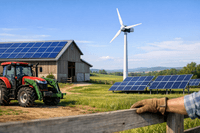
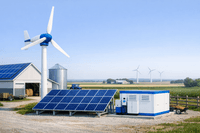
A wind-solar hybrid system offers a practical way out. By combining wind turbines and photovoltaic panels into one integrated setup, you generate power when the sun shines and when the wind blows - covering gaps that either source alone cannot fill. LuvSide's WindSun system was engineered precisely for this: decentralized, reliable energy autonomy for farms, remote facilities, and agricultural operations worldwide.
This guide walks you through how to evaluate, size, and implement a WindSun hybrid system on your farm - from the first site assessment to commissioning day.
Why Wind-Solar Hybrids Outperform Single-Source Systems on Farms
Solar panels produce peak output at midday on clear days. Wind turbines, on the other hand, often generate the most power during evenings, storms, and winter - precisely when solar output drops. By 2026, technological advances have made small- and medium-scale wind turbines affordable and easily deployable for agricultural applications, supporting grain drying, cold storage, and irrigation (Farmonaut3Farmonaut).
This natural complementarity is critical for farm operations that run around the clock:
- Irrigation pumps often need to run through evenings and early mornings
- Cold storage compressors cycle 24/7 to maintain temperature
- Barn ventilation for livestock welfare doesn't stop when clouds roll in
- Greenhouse climate control demands consistent power across seasons
A solar-only system would require oversized battery banks to cover nighttime and winter gaps. A wind-only system would leave you short on calm, sunny summer days. The hybrid approach reduces battery storage requirements by 30-40% compared to solar-only setups, because wind fills the production gaps that would otherwise drain your batteries.
Why hybrid beats solar-only on farms: Wind turbines generate power during evenings, nights, and overcast winter days - exactly when solar panels produce little or nothing. For farms with 24/7 loads like refrigeration, ventilation, or livestock watering, this complementary generation pattern significantly lowers total system cost and improves reliability.
For a deeper dive into how WindSun hybrids build resilience for off-grid operations, see our post on resilient off-grid energy with WindSun hybrids.
What's Inside a WindSun Hybrid System
LuvSide's WindSun combines proven components into a modular, scalable energy system:
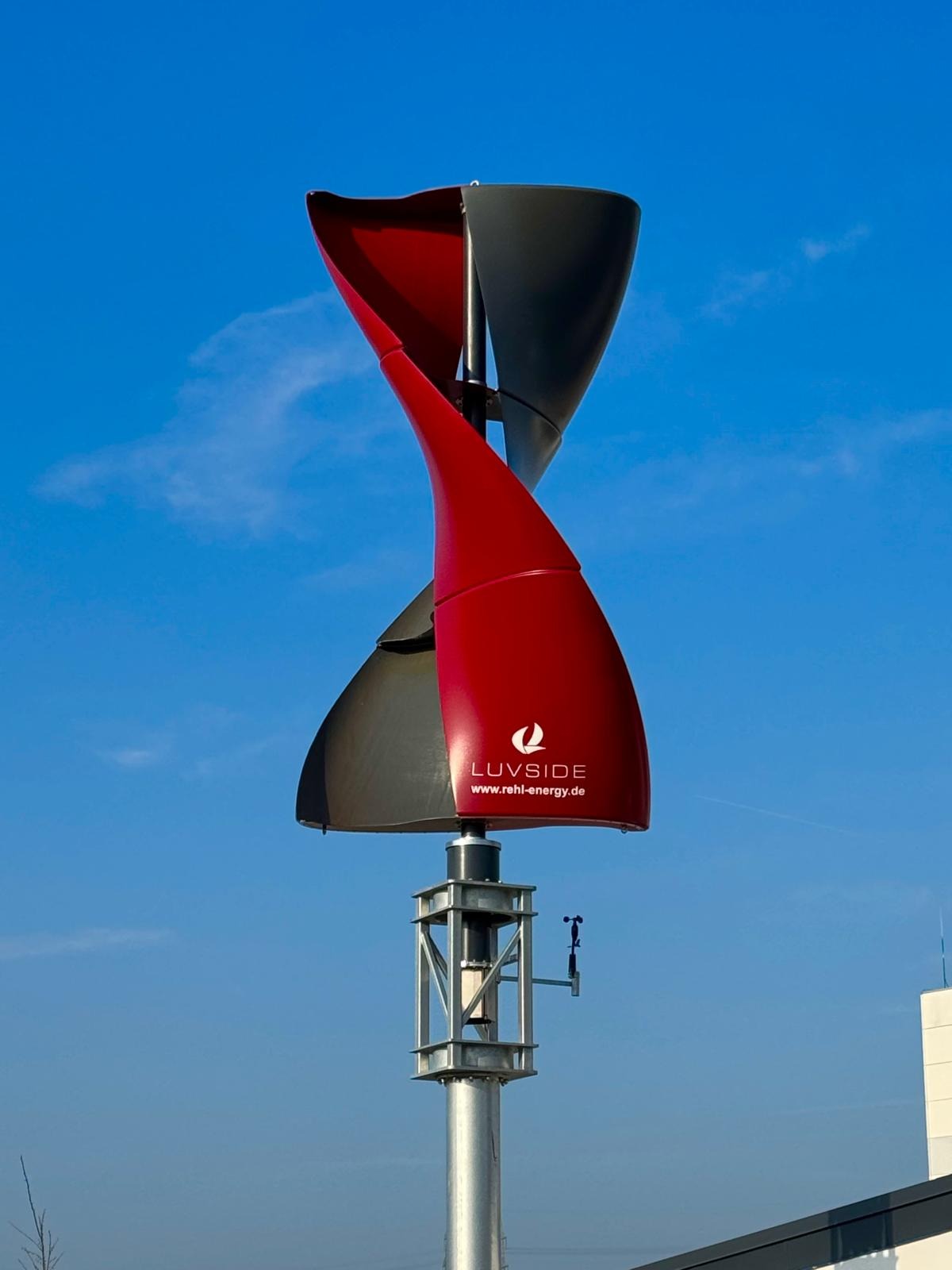
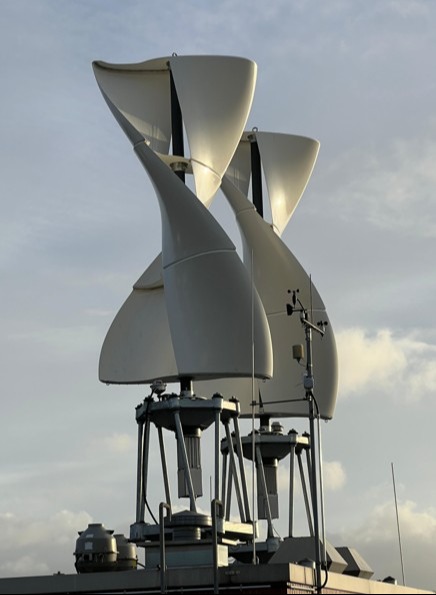
- Small wind turbine(s) - Such as the LS HuraKan 8.0 (horizontal axis, rated at approximately 8 kW at 11 m/s wind speed, with an estimated annual yield of ~12,000 kWh under optimal conditions) or the LS Helix vertical-axis models, which deliver over 25% higher efficiency than conventional Savonius-type designs
- Photovoltaic array - Roof-mounted, ground-mounted, or agri-PV panels sized to your solar resource and available space
- Hybrid inverter and charge controller - Manages inputs from both wind and solar, directing power to loads, batteries, or grid
- Battery storage - Sized for your required autonomy (hours or days of backup)
- Optional backup generator - For extended low-resource periods or peak demand events
The complete WindSun hybrid system delivers a nominal output of approximately 28 kW at 11 m/s wind speed, combining the wind turbine and PV components. The system operates both on-grid and off-grid, making it suitable for farms connected to unreliable grids as well as fully remote operations.
All components are German-engineered for durability and designed for quiet, low-maintenance operation - important when your turbine stands 50 meters from a barn full of dairy cows.
Step-by-Step: How to Equip Your Farm
Step 1 - Gather 12-24 Months of Energy Data
Collect your electricity bills (kWh and cost per kWh), diesel and generator fuel logs, and any sub-meter readings. Note seasonal peaks: irrigation-heavy summers, ventilation-heavy winters, or harvest-season grain drying spikes.
Step 2 - Evaluate Your Wind and Solar Resource
Check your location's average wind speed using national wind atlases or meteorological databases. Record solar irradiation from resources like the Global Solar Atlas. A viable site typically has annual average wind speeds of at least 4-5 m/s at hub height and solar irradiation above 1,000 kWh/m²/year.
Step 3 - Map Your Critical Farm Loads
List every electrically powered operation and categorize each:
| Load Category | Examples | Priority |
|---|---|---|
| Critical (must-run) | Livestock water pumps, milking robots, cold rooms, barn ventilation | Highest - system sized for these first |
| Flexible (schedulable) | Irrigation, grain drying, EV/equipment charging | Medium - can shift to peak generation hours |
| Non-critical | Yard lighting, workshop tools, non-essential buildings | Low - covered when surplus is available |
Barn ventilation uses approximately 2.5 kWh per cow per month (Ag Solar Solutions4Ag Solar Solutions), while a dairy farm using around 300 kWh per day typically needs 30-40 kVA of generation capacity to cover critical systems (Generators for Export2Generators for Export).
Step 4 - Size Your Hybrid System
Match your energy demand to a wind-solar ratio that covers 50-80% of annual consumption. A practical starting point:
- Small mixed farm (~30,000 kWh/year): 5 kW wind + 10 kWp solar PV
- Mid-size dairy farm (~80,000 kWh/year): 8 kW wind (LS HuraKan 8.0) + 25 kWp solar PV
- Large greenhouse (~150,000 kWh/year): 16 kW wind + 50 kWp solar PV
- Remote irrigation/livestock (~50,000 kWh/year): 8 kW wind + 15 kWp solar PV
Size battery storage for your required hours of autonomy - typically 4-12 hours for critical loads.
Step 5 - Run a Site Assessment and ROI Calculation
Engage LuvSide or a certified partner for an on-site wind measurement and shading analysis. Calculate payback using current energy costs, expected yield, and available incentives.
Step 6 - Install, Commission, and Monitor
LuvSide provides end-to-end project support: planning, permitting, installation, and commissioning. After go-live, monitor system output against your baseline to optimize load scheduling and maximize self-consumption.
For a more detailed sizing methodology, our guide on designing a WindSun hybrid system for farms covers formulas and worked examples.
ROI Scenarios: What the Numbers Look Like
The economics of a WindSun hybrid depend on your current energy costs, site resources, and system size. Here are realistic scenarios based on European farm energy profiles:
| Farm Type | Annual kWh | Current Cost (€/yr) | System Size | Est. Annual Savings (€) | Simple Payback (yrs) |
|---|---|---|---|---|---|
| Small Mixed Farm | 30,000 | €7,500 | 5 kW wind + 10 kWp PV | €3,800-4,500 | 8-10 |
| Mid-Size Dairy Farm | 80,000 | €20,000 | 8 kW wind + 25 kWp PV | €9,000-12,000 | 7-9 |
| Large Greenhouse | 150,000 | €37,500 | 16 kW wind + 50 kWp PV | €17,000-22,000 | 6-8 |
| Remote Livestock/Irrigation | 50,000 | €15,000* | 8 kW wind + 15 kWp PV | €8,000-11,000 | 5-7 |
*Includes diesel generator costs replaced by hybrid system.
Remote and off-grid farms typically see the fastest payback because they replace expensive diesel generation (often €0.30-0.50/kWh effective cost) rather than cheaper grid power. Wind power averaged $0.03 to $0.06 per kWh in many agricultural regions by 2025 (Farmonaut5Farmonaut), making the long-term cost advantage substantial.
Integrating with Specific Farm Loads
Irrigation and Water Pumping
Irrigation is often the single largest energy consumer on a farm. A WindSun system can power deep-well pumps and booster systems directly through the hybrid inverter. Schedule irrigation during peak solar hours and let wind power handle evening or early-morning watering cycles. For drip irrigation systems, the steady, low-power draw is an ideal match for hybrid generation.
Cold Storage and Refrigeration
Cold rooms and milk cooling run around the clock with compressor cycling. The hybrid system's battery buffer absorbs short gaps in generation, while the wind component keeps charging batteries overnight. Size the battery bank for 6-8 hours of compressor runtime to cover worst-case calm, cloudy nights.
Greenhouse Climate Control
Ventilation fans, circulation pumps, shading actuators, and supplemental lighting all benefit from consistent power. Wind turbines support grain drying, cold storage, and mechanized processing, and complement solar for energy generation throughout varying weather and daylight patterns (Farmonaut3Farmonaut). A WindSun system keeps greenhouse temperatures stable even during cloudy winter weeks when solar alone falls short.
Livestock Barns and Milking Parlors
Automated milking systems, feed conveyors, ventilation, and water heaters are all critical for animal welfare and productivity. A WindSun system ensures these keep running during grid outages - a real advantage in rural areas with unreliable supply.
Your Site Assessment Checklist
Before contacting LuvSide for a detailed consultation, gather the following:
- 12-24 months of electricity bills (kWh and cost)
- Diesel/fuel consumption records for generators, pumps, or equipment
- List of major electrical loads with estimated kW ratings and daily run hours
- Seasonal demand pattern (which months are highest?)
- Site wind data or nearest weather station records (average wind speed)
- Available installation space for PV panels (roof area, ground area in m²)
- Available space and height clearance for a wind turbine (minimum 10-12 m tower height)
- Grid connection status (on-grid, weak grid, or fully off-grid)
- Existing backup systems (diesel generator capacity, if any)
- Budget range and investment horizon (target payback period)
This checklist gives LuvSide's engineering team everything needed to deliver an accurate, site-specific proposal.
Frequently Asked Questions
How much wind do I need for a WindSun hybrid system to make sense? An annual average wind speed of at least 4-5 m/s at hub height is a good baseline. Sites with 5.5 m/s or higher see significantly better wind yields. LuvSide can perform a site-specific wind assessment to confirm viability.
Can a WindSun system power my irrigation pumps directly? Yes. WindSun systems supply continuous power for high-demand agricultural loads, including irrigation pumps, through a hybrid inverter and battery buffer. The system can be sized to match your pump's kW rating and daily run hours.
What happens during extended periods of low wind and low sun? The battery bank provides autonomy for hours or days depending on sizing. An optional backup diesel generator can be integrated for complete reliability. In practice, prolonged simultaneous low-wind and low-sun periods are rare in most agricultural regions.
Is a WindSun system noisy? Will it disturb livestock? LuvSide's turbines use flow-optimized blade geometry engineered for quiet operation. They are suitable for noise-sensitive environments, operating comfortably near barns and livestock facilities.
What maintenance does the system require? LuvSide turbines are built for low maintenance and durability. Periodic inspections (typically once or twice per year) and standard PV panel cleaning are recommended. LuvSide offers maintenance services through its partner network.
Can I connect a WindSun system to the grid and sell excess power? Yes. WindSun systems operate both on-grid and off-grid. In grid-connected mode, excess power can be fed into the grid where feed-in tariffs or net metering apply, further improving ROI.
Start Your Path to Farm Energy Autonomy
Rising energy costs and unreliable rural grids are not temporary problems - they are structural challenges that demand a structural solution. A WindSun hybrid system from LuvSide gives your farm a proven, efficient, and durable energy platform that works year-round, day and night.
The steps are straightforward: gather your data, assess your site, size the system to your loads, and let LuvSide handle the engineering and installation. Farms across Europe, Africa, and beyond are already making this transition.
The question is not whether renewable energy makes sense for agriculture - by 2025, wind and solar supplied more power than coal worldwide for the first time (Yale E3606Yale E360). The question is how quickly you can start capturing those savings on your own land.
Ready to assess your farm's hybrid energy potential? Contact LuvSide for a site-specific consultation and take the first step toward energy autonomy.