
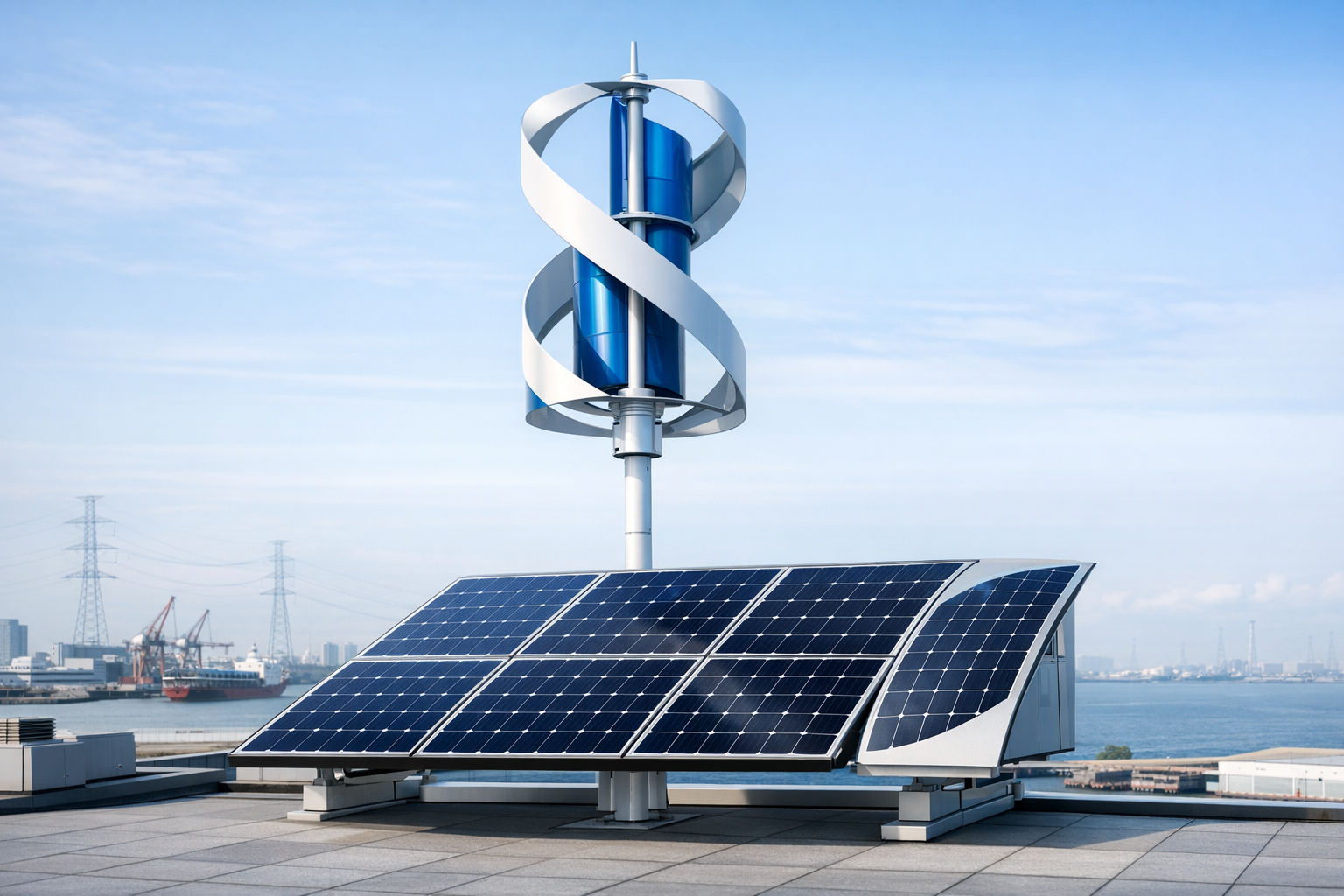
In 2025, U.S. electricity demand rose noticeably for the first time in decades, driven by data centers, electric vehicles, and a rebounding economy.[1] Globally, power consumption is accelerating, but decades of investment in energy efficiency and renewables mean this demand is increasingly met by sustainable technologies rather than new fossil capacity.[2] For decision-makers, the central question is no longer if high-efficiency renewable technologies can meet this growth, but how fast they can be deployed at both utility and distributed levels.
Rising Electricity Demand: What Changed in 2024-2025?
After more than a decade of near-flat consumption, electricity use is rising again in advanced economies.
The U.S. signal: demand is back
BloombergNEF's 2026 Sustainable Energy in America Factbook shows a structural shift in 2025:[1]
- U.S. retail electricity demand grew 2% year-on-year in 2025 and is 8% higher than a decade ago.
- U.S. power generation hit a 20-year high, while policymakers held focus on affordability.
- Data center electricity demand quintupled over the last 10 years and grew 150% in the last five, with 23 GW of IT capacity live and 48 GW under construction or committed by early 2025.
- Total primary energy consumption rose only 1.2%, while GDP grew 2%, a gap due to continual energy efficiency improvements.
These developments mirror what companies are facing: increasing electric loads-especially from digital infrastructure-against a backdrop of pressure to control energy costs and emissions.
The global picture: faster electrification
The International Energy Agency (IEA) reports global electricity demand grew 4.3% in 2024, well above the 2010-2023 average of 2.7%.[2] Key drivers:
- Accelerated electrification of transport and industry
- Growth in cooling and HVAC demand as heatwaves become more frequent
- Higher consumption from data centers worldwide
Meanwhile, clean electricity's scale-up is unprecedented: in 2024, over 80% of the increase in global electricity generation came from renewables and nuclear, and renewables alone supplied nearly three-quarters of the additional output.[2]
The message for decision-makers: demand is rising persistently, but it is being met more by efficient, low-carbon technologies than fossil sources.
Sustainable Energy Technologies Are Already Carrying Much of the Load
Utility-scale capacity additions are led by clean energy
In the U.S., 54 GW of new utility-scale generation and storage entered service in 2025-the highest in more than 20 years.[1]
- 61% of new capacity was renewable energy, dominated by 27 GW of utility-scale solar.
- 15 GW of grid-scale storage was installed, a 35% annual increase.
- Investment in renewables, electrified transport, grids, and industrial decarbonization hit a record $378 billion.
Globally, UN-backed data for 2024 shows:[3]
- 74% of new electricity generation came from renewables.
- 92.5% of all newly installed power capacity was renewable.
- Levelized costs for solar and wind were 41% and 53% lower than those for new fossil plants, respectively.
High-efficiency technologies have become the standard for most new capacity.
Efficiency: the "invisible" power plant
The BloombergNEF/BCSE Factbook emphasizes that decades of efficiency investments-from LED lighting to optimized industrial processes-enabled the U.S. to expand GDP faster than primary energy use in 2025.[1]
For companies, this means:
- Every avoided kilowatt-hour reduces exposure to volatile energy costs.
- Efficiency upgrades often have shorter paybacks than new generation assets.
- Efficient end-use makes on-site renewables more effective; a smaller, smarter system can cover a larger share of demand.
The combination of efficiency + high-efficiency renewables prevents rising demand from translating into proportionally higher bills.
Outlook to 2030: Demand Growth Meets Massive Renewable Build-Out
Renewables set to cover nearly half of electricity demand
The IEA's Renewables 2024 outlook projects about 5,500 GW of new renewable capacity to be added globally from 2024-2030-almost triple today's levels.[4]
By 2030:
- Renewables will supply about 46% of global electricity.
- Wind and solar combined are expected to provide around 30% of total electricity, doubling their 2023 share.
- Solar and wind will comprise approximately 95% of new renewable additions.
Even with electricity consumption rising by over 40% by 2035, major energy companies expect more than 80% of incremental demand to be covered by renewables, especially wind and solar.[5]
Why distributed, high-efficiency systems matter now
Large-scale renewables and grid-scale storage will provide much of the new supply-but not all.
Several constraints increase the value of distributed energy resources (DERs):
- Grid congestion and long interconnection queues: In 2025, 377 GW of new capacity sought connection in U.S. ISO markets, often facing multi-year waits.[1]
- Land and permitting constraints for large-scale projects, especially in densely populated or sensitive areas.
- The need for resilience and autonomy at critical sites (e.g., telecom towers, ports, water, hospitals, industrial campuses) where outages are unacceptable.
Distributed, high-efficiency systems-such as small wind turbines, rooftop PV, and hybrid microgrids-can be installed closer to demand, cut transmission losses, and ease grid constraints. They turn global energy transition goals into real gains for local energy security.
The Rise of High-Efficiency Small Wind and Hybrid Systems
Small wind: from niche to strategic asset
Small wind power systems (0.1-100 kW per turbine) are suited for local electricity generation in residential, agricultural, municipal, and small business settings.[6] Increasingly, they serve hybrid networks that combine wind, solar, and storage.
Analysts forecast the global small wind market will grow from $1.65 billion in 2024 to $2.47 billion by 2030, a CAGR of roughly 7%.[7] Growth is driven by:
- Rising energy prices and a need for local autonomy
- Incentives for distributed renewables
- Advances in turbine efficiency, low-noise design, and controls
For industrial and municipal customers, small wind is now a strategic building block in resilient microgrids-especially along coasts, in industrial areas, ports, and rural sites.
Why vertical and urban wind is gaining interest
Vertical-axis wind turbines (VAWTs) offer:
- Reliable operation in turbulent, shifting winds common to urban, coastal, and hilly sites
- Lower rotational speeds and reduced noise, suitable for installation near buildings and public areas
- Compact, flexible mounting-rooftops, masts, or waterfronts-for easier integration[8]
These features match the needs of LuvSide's core customers-ports and marinas, industrial facilities, telecom sites, resorts, and municipalities-seeking quiet, visually appealing renewables.
LuvSide: High-Efficiency Small Wind and Hybrid Wind-Solar in Practice
LuvSide GmbH, near Munich, develops and manufactures high-efficiency small wind turbines and hybrid systems for decentralized, autonomous energy in windy regions worldwide.
Engineered for efficiency, robustness, and urban integration
LuvSide's range includes:
- Vertical-axis turbines: LS Double Helix 1.0 (1 kW), LS Helix 3.0 (3 kW), and LS Double Helix 0.5 Marina (0.5 kW)
- LS HuraKan 8.0: a horizontal-axis 8 kW turbine for high-yield sites, generating roughly 12,000 kWh/year at 11 m/s
- WindSun: a hybrid system combining wind turbines and photovoltaics; delivers about 28 kW nominal at 11 m/s in a compact setup
Key technical differentiators:
- Optimized rotor and lamella geometry supplies over 25% higher efficiency than conventional Savonius-type small wind designs
- Robust, lightweight construction for harsh conditions both onshore and offshore
- Low-noise, low-vibration, urban-compatible design
For decision-makers, this translates to more kilowatt-hours from the same wind resource, fewer siting issues, and higher acceptance in sensitive locations.
Hybrid WindSun systems: 24/7 autonomy alongside solar
LuvSide's WindSun concept integrates small wind turbines, PV, and typically storage into modular hybrid systems. This addresses several major challenges:
- Temporal complementarity: wind often peaks at night, in winter, or during cloudy periods when solar lags
- Reduced storage needs: Balanced generation lowers reliance on oversized battery or diesel backup
- Boosted resilience: Hybrid microgrids sustain critical loads even during prolonged low-sun or grid outages
These benefits apply to:
- Telecom towers and remote sites in windy rural settings
- Ports, marinas, and coastal infrastructure-LuvSide already supports reference projects
- Resorts, islands, and remote communities seeking to cut diesel use and improve sustainability
- Industrial parks and logistics hubs requiring reliable, on-site renewable power
An example is the pilot installation at V&A Waterfront in Cape Town, where LuvSide set up four LS Double Helix turbines in a prominent urban waterfront location. The project highlights how compact, quiet, design-focused turbines can fit public spaces while supplying local, decentralized energy.
Centralized vs Distributed: Two Paths to Meeting Rising Demand
The most resilient approach is rarely "either/or." For many, the focus is how to enhance grid supply with high-efficiency, on-site renewables.
| Dimension | Centralized-only buildout (grid purchases) | Centralized + distributed high-efficiency portfolio |
|---|---|---|
| Time to impact at specific site | Dependent on utility projects, often multi-year | Many DER and small wind/PV projects delivered in months to ~2 years |
| Exposure to price volatility | High-tariffs follow wholesale market shifts and congestion | Lower-some load is met by on-site generation at stable cost |
| Grid constraints | Vulnerable to local congestion/curtailment | On-site supply eases local grid stress, may defer upgrades |
| Resilience during outages | Limited to UPS/diesel if available | Hybrid microgrids (wind + solar + storage) keep critical loads running without continuous diesel use |
| ESG and brand impact | Indirect-via green tariffs/PPAs when available | Visible, local clean energy assets aid ESG reporting and stakeholder dialogue |
For LuvSide's customers-industrial facilities and municipalities-combining high-efficiency small wind, PV, and storage with grid supply is a pragmatic way to handle increasing demand, build autonomy, and meet sustainability goals.
Practical Next Steps for Decision-Makers (2026-2030)
1. Quantify your demand trajectory
- Model projected load growth to 2030, including electrification efforts (EVs, heat pumps, process conversion) and possible IT expansion
- Stress-test against extreme weather and peak scenarios
2. Capture the immediate efficiency potential
- Audit major loads (HVAC, motors, compressed air, process heat) and prioritize upgrades with paybacks <3-5 years
- Align with ISO 50001 or ESG programs for impact tracking
3. Map on-site renewable and hybrid potential
- Assess solar roof and ground potential plus wind resource at relevant heights, especially for coastal, rural, or exposed industrial locations
- Identify sites where small wind or hybrid wind-solar can enhance the load profile (night, winter, off-grid)
4. Design for autonomy and resilience, not just kWh
- For critical operations, define autonomous runtime targets (e.g., 24-72 hours grid-free)
- Employ hybrid models (wind + solar + storage + limited diesel) to maximize uptime with minimal fuel
5. Partner with specialized providers
- Work with partners offering end-to-end support-resource assessment, system design, installation, and maintenance
- For small wind and hybrid solutions, providers like LuvSide deliver engineering-driven planning, "Made in Germany" quality, and international project experience
Frequently Asked Questions
How can efficiency and renewables help control energy bills as demand keeps rising?
U.S. data shows that in 2025, electricity demand and prices increased, but primary energy use grew less than GDP thanks to years of efficiency improvements.[1] Most new power capacity is renewable, with lower levelized costs than new fossil plants.[3] For businesses, combining efficiency measures with on-site high-efficiency renewables reduces their reliance on volatile grid prices and stabilizes energy costs.
When is a small wind turbine preferable to more solar PV?
Small wind makes sense when:
- There is a strong wind resource, especially during times when solar output is low
- Roof or land area for PV is limited, but vertical or waterfront mounting is available
- Year-round operations in windy coastal or rural settings benefit from consistent wind
Adding high-efficiency small wind (or WindSun hybrid) increases on-site renewable coverage and reduces storage or backup needs.
Are vertical small wind turbines noisy or disruptive near buildings?
Modern vertical-axis turbines operate at slower speeds and are engineered for low aerodynamic noise, making them suitable for urban and noise-sensitive areas.[8] LuvSide's Helix models use streamlined lamella geometry and vibration-optimized structures for quiet, low-vibration performance-ideal for buildings, promenades, and public spaces.
How do hybrid wind-solar systems improve resilience for critical infrastructure?
Hybrid systems like WindSun combine wind, PV, and batteries into coordinated microgrids. Wind and solar often complement each other, so:
- Generation is flatter and more continuous across 24 hours
- Battery or diesel backup needs are reduced
- Redundancy allows operations even if one resource temporarily drops
Critical infrastructure-telecom, ports, water, emergency services-can achieve higher uptime, reduced fuel logistics, and better CO₂ performance versus backup diesel or PV-only.
What are realistic timelines for distributed renewable projects?
Timelines vary by country, but typically:
- Pre-feasibility and resource assessment: 1-3 months
- Engineering, permitting, and procurement: 3-9 months (shorter where permitting is simple)
- Installation and commissioning: usually a few weeks to a few months per site
Compared to multi-year utility projects, well-designed distributed systems can begin reducing grid demand and improving resilience within 12-24 months from project start, especially with experienced, end-to-end providers.
Rising electricity demand through 2030 is a lasting trend-driven by AI, electrification, and climate adaptation. The synergy of high-efficiency technologies, large-scale renewables, and distributed hybrid systems ensures demand growth remains compatible with competitiveness, resilience, and climate objectives. Organizations that act now can leverage solutions such as LuvSide's high-efficiency small wind and WindSun hybrid systems for sustainable, future-ready local energy autonomy.