

Executive summary: Eco-luxury travel has become mainstream, with most travelers preferring sustainable hotels and many willing to pay more. Meanwhile, off-grid and island resorts face escalating diesel costs, unpredictable fuel logistics, and increasing pressure to decarbonize. Hybrid renewable energy systems-particularly wind-plus-solar solutions like LuvSide's small wind turbines and WindSun hybrids-empower luxury resorts to transform energy from a risk and cost concern into a resilient asset that strengthens both their brand and sustainability profile.
1. Eco luxury travel is moving off-grid-and guests demand real sustainability
Sustainability is now a fundamental buying criterion in hospitality.
- 68% of hotel guests prefer sustainable hotels when possible.[1]
- 74-83% of travelers believe sustainable travel is important and seek brands with a clear sustainability commitment.[2]
- At the luxury end, 78% of travelers choose companies with robust sustainability policies.[3]
- Eco-certified hotels see 12-15% higher revenue than non-certified counterparts, due to higher occupancy and premium pricing.[1]
For off-grid and island resorts, this trend is critical:
- Such properties position themselves as nature-immersive, where diesel noise or visible pollution contradict guest expectations.
- Eco luxury guests now expect genuine renewable energy solutions and clear climate action-beyond resource-saving basics.
Thus, energy systems have become strategic for positioning a resort as a green hotel or luxury eco resort, not just an operational consideration.
2. The energy reality of an off-grid luxury resort
A remote, five-star resort typically must power:
- Villas and suites (HVAC, lighting, hot water)
- Restaurants, pools, spas
- Staff facilities and back-of-house
- Water treatment, desalination, e-mobility
Many still depend on diesel generators. Island and safari resort case studies reveal:
- A South African lodge reduced diesel by 124,000 liters/year and lowered CO₂ emissions by roughly 320,000 kg with hybrid renewables.[4]
- A Maldives resort saved 170,000 liters of diesel and over 500,000 kWh annually with a solar-based system.[4]
- The Racha, Thailand, reduced diesel by 120,000 liters/year using integrated renewables.[4]
These examples highlight systemic challenges with diesel-only setups:
- Cost volatility
- Supply risk
- Weather or logistical issues can delay deliveries, yet guests expect uninterrupted service.
- Noise and emissions
- Gensets generate 80-90 dB-comparable to heavy machinery-disrupting tranquility.
To stay competitive, off-grid resorts must address cost, logistics, and ESG risks. Hybrid microgrids-combining solar, small wind, storage, and backup diesel-offer a proven solution.
3. Why hybrid wind-solar outperforms diesel-and solar-only-in off-grid resorts
While many resorts have added solar PV to reduce diesel use, solar-only systems have limits, particularly for continuous, weather-dependent operations.
3.1 Diesel-only microgrids: costly, noisy, and carbon-intensive
Strengths
- Consistent, controllable power
- Known technology and maintenance
Weaknesses for luxury eco resorts
- High, unpredictable levelized cost of electricity (LCOE); remote islands report €0.30-0.35/kWh.[6]
- Strong dependency on fuel logistics.
- High emissions and significant noise, incompatible with eco luxury expectations.
3.2 Solar-only systems: good for daytime, but gaps persist
Solar PV is reliable for sunny locations but comes with drawbacks:
- No output at night or in poor weather, requiring large batteries or diesel backup.
- Seasonal fluctuations can reduce winter output by up to 50%.
- Space limitations for PV due to site constraints.
3.3 Hybrid wind-solar-storage: smoother output, greater autonomy
Hybrid microgrids integrating wind, solar, and storage are increasingly the standard for off-grid operations:
- A Mediterranean island microgrid using both wind and solar met 95% of annual demand from renewables, cutting fuel costs from €150,000 to €7,500/year.[6]
- Another island case saw a 90% cut in diesel imports and 40% lower energy costs per kWh after deploying a solar-plus-storage system.[7]
Wind and solar resources complement each other:
- Wind often peaks at night or during storms, when solar is less effective.
- Small wind turbines can be integrated visually into resort design and placed to capture wind without competing for space with PV.
The result:
- Greater renewable share
- Lower battery stress (wind recharges storage at night)
- Reduced diesel use and costs
- Quieter, more consistent guest experience
The next decision: choosing the optimal wind technology for the site.
4. How LuvSide's systems fit off-grid luxury resorts
LuvSide develops small wind turbines and hybrid wind-solar solutions for decentralized, autonomous power in wind-rich areas. The range includes:
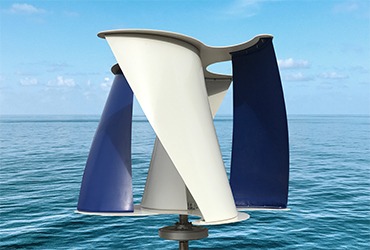
- Vertical-axis turbines: LS Double Helix 1.0 (1 kW), LS Helix 3.0 (3 kW), with efficient, stable helix rotor geometry.
- Horizontal-axis LS HuraKan 8.0: ~8 kW, delivers ~12,000 kWh/year at 11 m/s.
- WindSun hybrid systems: Wind + solar PV solutions with a combined nominal capacity of ~28 kW at 11 m/s, made for autonomous off-grid use.
4.1 Design advantages for luxury resorts
- Quiet, low-vibration operation: Vertical helix turbines are geräuscharm (low-noise), ideal for guest areas. Optimized geometry ensures efficiency without typical turbine noise-essential for close-proximity villas or spas.
- Aesthetic, compact form: Sculptural, design-conscious turbines integrate well with architecture-on rooftops, near paths, or as visual highlights-without industrial visuals.
- Efficient in variable wind: Streamlined blades deliver over 25% greater efficiency than standard Savonius designs, ideal for the moderate winds of coastal resorts.
- Robust, 'Made in Germany' build: Built for harsh, coastal conditions, supporting long-term reliability and minimal maintenance.
- End-to-end support: LuvSide covers consulting, planning, installation, commissioning, and maintenance, giving operators a single, accountable partner.
4.2 Example hybrid architecture for a 40-villa off-grid resort
Every location is unique, but a typical solution might feature:
- Renewable generation
- Solar PV arrays sized for daytime use
- LS Double Helix 1.0/3.0 turbines positioned in wind corridors
- WindSun hybrid units as wind-PV hubs for the microgrid
- Storage and backup
- Battery banks sized for several hours at peak load
- Diesel generators retained as emergency backup
- Smart control
- An energy management system (EMS) orchestrates resources, ensuring high renewable use with guest comfort
Comparable microgrid cases suggest 40-90% diesel reduction and similar CO₂ savings for this architecture.[4] Benefits include:
- Significant OPEX savings and long-term cost predictability
- Enhanced resilience to logistical and price shocks
- Authentic, visible sustainability to share with guests
4.3 Diesel vs. solar-only vs. LuvSide hybrid-qualitative comparison
| Criterion | Diesel-only microgrid | Solar-only system | Hybrid wind-solar with LuvSide |
|---|---|---|---|
| Fuel use | 100% diesel | Diesel at night/bad weather | Diesel only as backup |
| Typical LCOE (remote islands) | High (€0.30-0.35/kWh)[6] | Medium (varies with storage) | Lower; often 40-70% below diesel[6] |
| Noise at guest areas | High (genset hum 24/7) | Lower, but genset sometimes needed | Very low: small wind + solar + limited genset |
| CO₂ emissions | Highest | Lower | Lowest (up to 90% less than diesel)[4] |
| Eco-luxury brand perception | Misaligned | Better, but has winter gaps | Strong alignment |
| Fuel logistics dependency | Very high | Moderate | Low |
5. The business case: from cost to brand and resilience asset
Investing in LuvSide hybrid systems is a strategic move for off-grid resorts across three key areas.
5.1 Revenue and pricing upside
- 45-85% of travelers are willing to pay more for truly eco-friendly hotels; premiums of 10-25% are common in certain segments.[8]
- Certified sustainable hotels achieve 12-15% higher occupancy and revenue.[1]
With visible investments in renewable energy solutions-turbines, solar, real CO₂ reductions-resorts create an authentic narrative with strong market appeal.
5.2 Cost stability and risk mitigation
- Hybrid systems reduce exposure to fuel price spikes and supply chain issues.
- Durable assets shift energy costs from volatile OPEX to predictable CAPEX and maintenance.
- Clearer margins and valuations support owners and investors.
5.3 ESG, regulation, and brand protection
- Meeting rising ESG requirements on-site strengthens partner and regulator negotiations.
- Quiet, clean infrastructure enhances the guest experience and protects eco-luxury branding.
In a volatile world, energy supply resilience is a practical, future-oriented safeguard.
6. Practical next steps for resort operators
For Operations Directors and Sustainability Managers, implementation involves a step-by-step approach.
6.1 Analyze the current energy baseline
- Collect 12-24 months of fuel and generator data
- Break down by key loads (HVAC, desalination, kitchen, pools, mobility)
- Distinguish critical vs. flexible loads
6.2 Evaluate wind and solar resources
- Use meteorological data or site studies to map seasonal resources
- Focus on night and winter wind profiles for wind potential
6.3 Co-design the hybrid system with LuvSide
LuvSide engineers assist with:
- Sizing PV, turbines (Helix/HuraKan), WindSun units, batteries, backup diesel
- Micro-siting to optimize for:
- Aesthetics and guest views
- Noise buffers
- Wind corridors and structures
- Simulating expected renewable fraction, diesel savings, and ROI
6.4 Implementation and communication
- Schedule installation for minimal guest disruption
- Integrate monitoring dashboards for transparency (e.g., "Today, your villa was 92% powered by wind and sun")
- Align with eco-luxury brand narrative and certifications
Frequently Asked Questions
How much diesel can an off-grid resort save with a hybrid wind-solar system?
Island and safari resorts report annual diesel reductions of 40-90% with a well-designed renewable microgrid.[4] LuvSide systems aim to maximize renewable share, relegating diesel to true backup status.
Are small wind turbines too noisy or intrusive for luxury guests?
LuvSide's vertical Helix turbines are engineered for quiet, low-vibration operation and compact, aesthetic design, suitable for integration near guest areas.
What if our site already has extensive solar-why add wind?
Solar is effective during the day but limited at night and in adverse weather. Wind often peaks under those conditions. Adding wind and WindSun hybrids balances generation, reduces battery use, and minimizes diesel reliance.
What is the typical payback period for a hybrid system in a resort?
Payback varies by site and system scale, but case studies find major operating cost reductions with paybacks ranging from a few to several years, especially where diesel delivers at high cost.[9] LuvSide supports optimal system dimensioning for commercial viability.
Does LuvSide support projects outside Europe?
Yes. LuvSide delivers and maintains projects globally-including in Germany, Saudi Arabia, South Africa, and the Netherlands-serving coastal and island resorts via its own teams and partners. This global focus ensures reliable, decentralized energy for off-grid destinations.